Silfra Snorkeling vs. Silfra Diving
Which experience is right for you?
Silfra fissure is one of the most unusual places in the world. Visitors hoping to explore underwater can choose to snorkel or dive, but what are the pros and cons of each activity? In this article, we’ll take a look at what to expect, discussing the skills you need, how the changing seasons have an impact and what you can do to prepare for this incredible adventure. If Silfra snorkelling versus diving is what’s on your mind today, one of our tours will be exactly what you’re looking for.
What is Silfra fissure and why is it special?
Silfra fissure is the result of a series of earthquakes that impacted part of what’s now Þingvellir National Park back in 1789. This is a part of Iceland where the Eurasian and North American plates are slowly creeping apart. In a typical year, this movement amounts to just a couple of centimetres but taken cumulatively, even a small amount such as this quickly becomes noticeable.
Periodically, the pressure that builds up is released in the form of seismic activity.
Earthquakes create rifts and fissures; Silfra is the most significant of these in Iceland, not least because of its longevity. And that’s not the only thing that makes it stand out: here, an underground spring fed by meltwater from the Langjökull glacier ensures a steady supply of water.
The rocks filter out any impurities; it means that the water is remarkably clear. In fact, it’s so effectively filtered that you can drink it – given that it’s perfectly chilled you won’t need to add ice cubes! Regardless, this unusual combination of tectonic activity and freshwater makes Silfra a truly unique place.
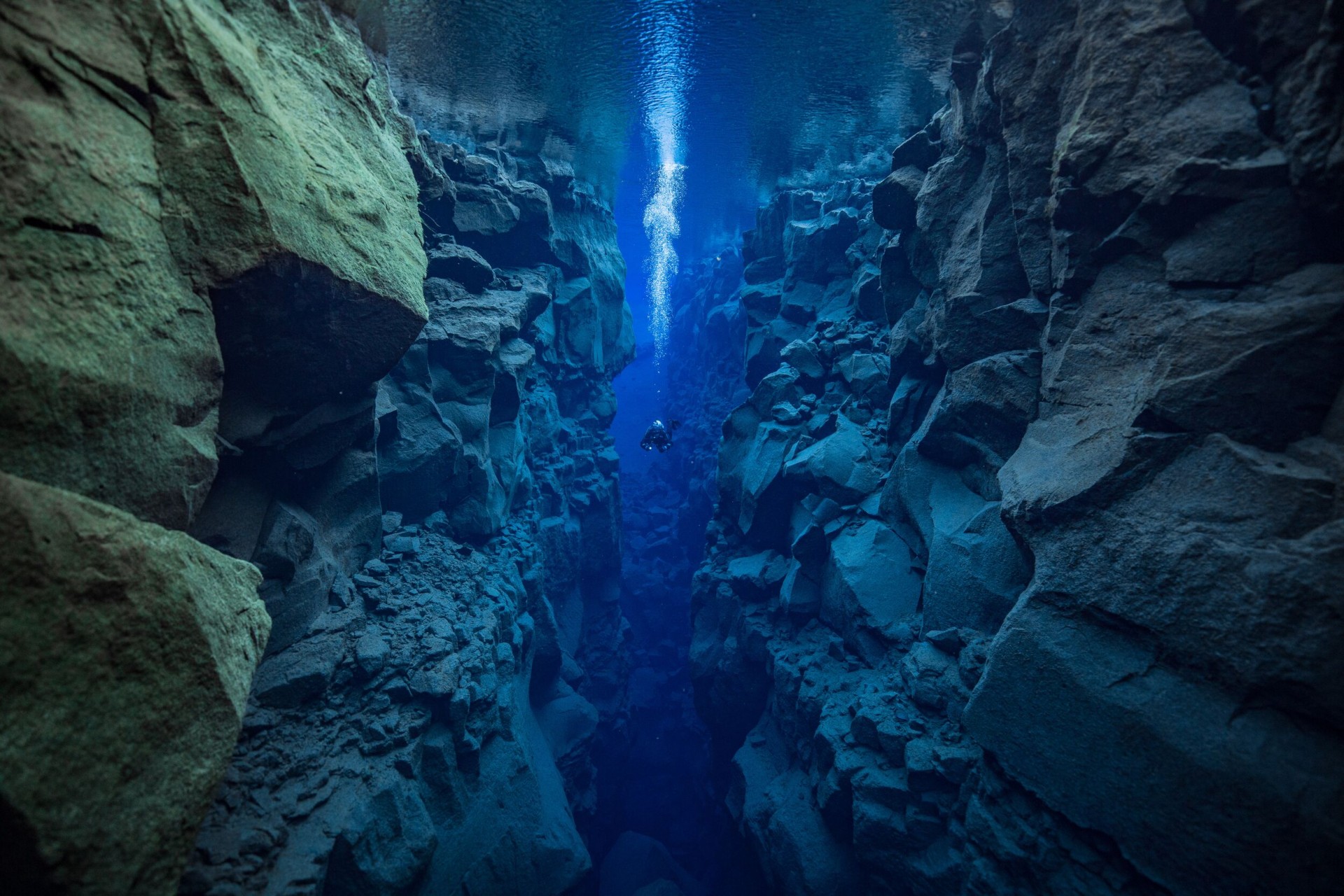
Broadly speaking, you could describe Silfra Fissure as having four distinct sections. The first you’ll encounter is Big Crack. Despite its name, this is actually the narrowest part of the fissure – in places it’s just 50 centimetres wide. Here, the two tectonic plates are so close to each other you can reach out and touch both at the same time.
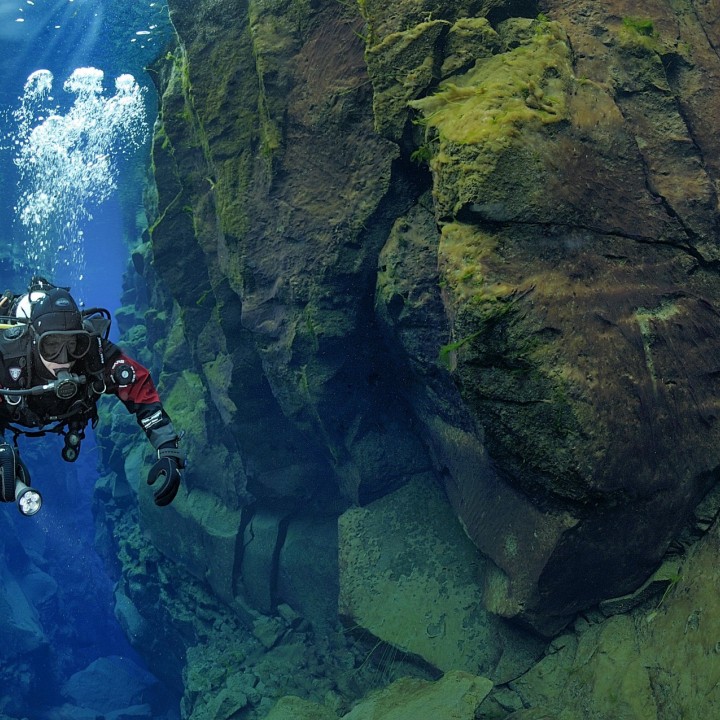
The fissure opens up to reveal Silfra Hall. This is considerably wider, stretching eight metres across and characterised by a cave system. It’s here that you’ll begin to properly appreciate just how clear the water is; visibility is usually well over a hundred metres and if you get the angle right you can sometimes see as far as Lake Þingvallavatn.
From here, you venture into Silfra Cathedral, so named because of its sheer lava rock walls. It’s about 23 metres down to the bottom here. In those deep recesses of the fissure, not much can survive; the adaptable dwarf char is one notable exception, though don’t expect to see one if you're snorkeling as you’ll be up near the surface.
Finally, you reach Silfra lagoon. Shallower than previous sections, this part of Silfra is flooded with light, enhancing the colours. The vivid turquoise water complements the abundant emerald-green algae and it’s this vibrant combination which adds an extra dimension to the magic as your adventure reaches its conclusion.
Iceland’s unpredictable weather is often on the minds of cautious travellers. The wild winds, tempestuous storms and white-out blizzards that locals accept as normal components of winter can strike fear into self-drive tourists. Even in spring and autumn Iceland can experience sub-zero temperatures from time to time. Of course, booking a tour from Reykjavik enables you to leave the driving to a local and gives you peace of mind.
Happily, visiting Silfra Fissure to snorkel or dive is possible year-round. That’s because the water temperature is reasonably stable, hovering between about 2 and 4°C. Coupled with the movement of water – the presence of the spring creates a steady but gentle current – this means that it doesn’t freeze over, even if the surrounding landscape is blanketed with snow. Snug in your insulated dry suit, you won’t even remember what season it is until you step out of the water.
What tours can you book if you want to experience Silfra snorkeling in Iceland?
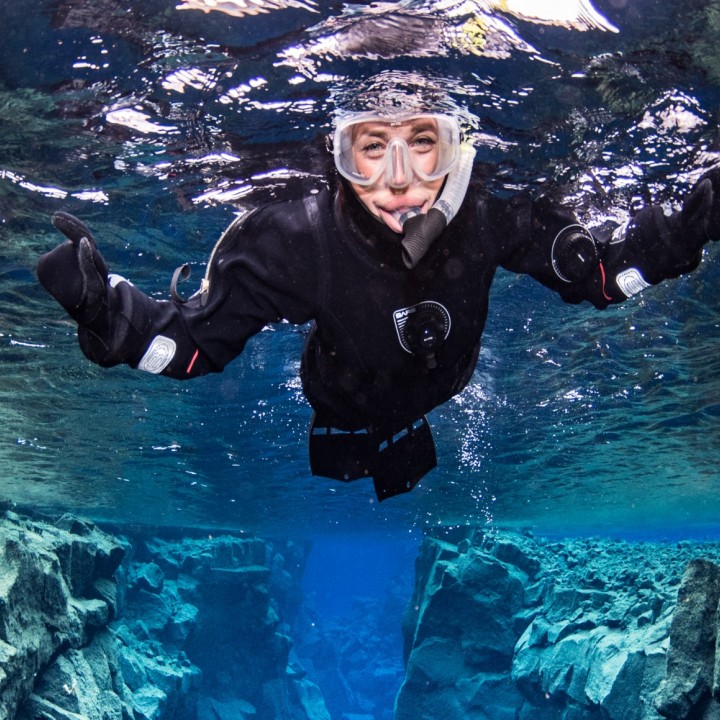
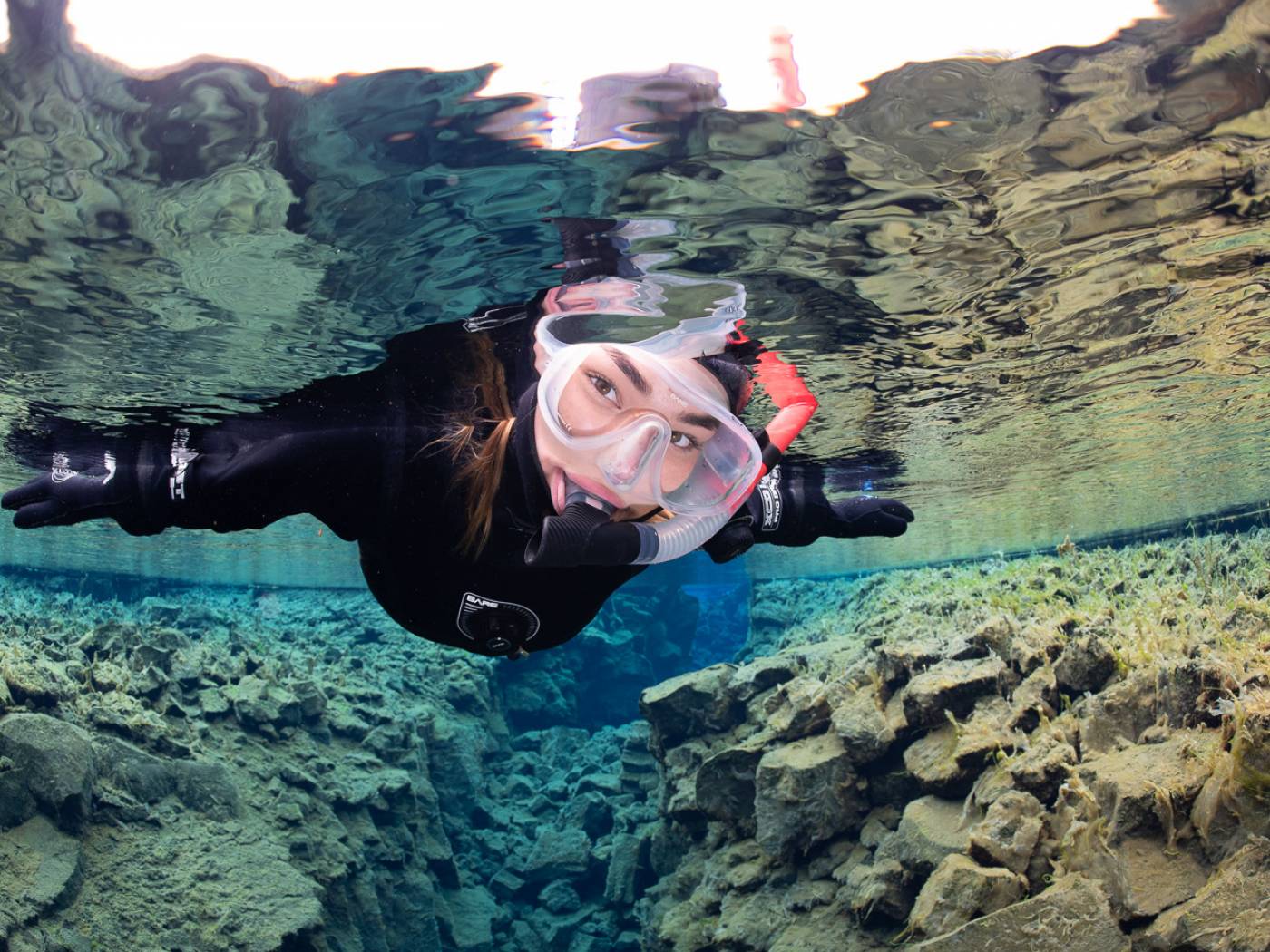
Snorkeling is the most popular way to experience Silfra Fissure. Sign up for this thrilling activity and you’ll typically spend about 30 to 40 minutes floating through Big Crack and snorkeling through the main areas of Silfra Hall, Cathedral and Lagoon. That’s long enough to get a feel for its unique qualities without becoming too cold. With a dry suit to keep you warm and full instruction about how to use your snorkeling equipment, no prior experience is necessary – just an enthusiasm for nature and a can-do attitude. If you have a sense of adventure and can swim – the dry suit acts as a buoyancy aid but you’ll still need to be able to stay afloat – you’ll love this incredible experience.
How is Silfra diving in Iceland different to snorkeling?
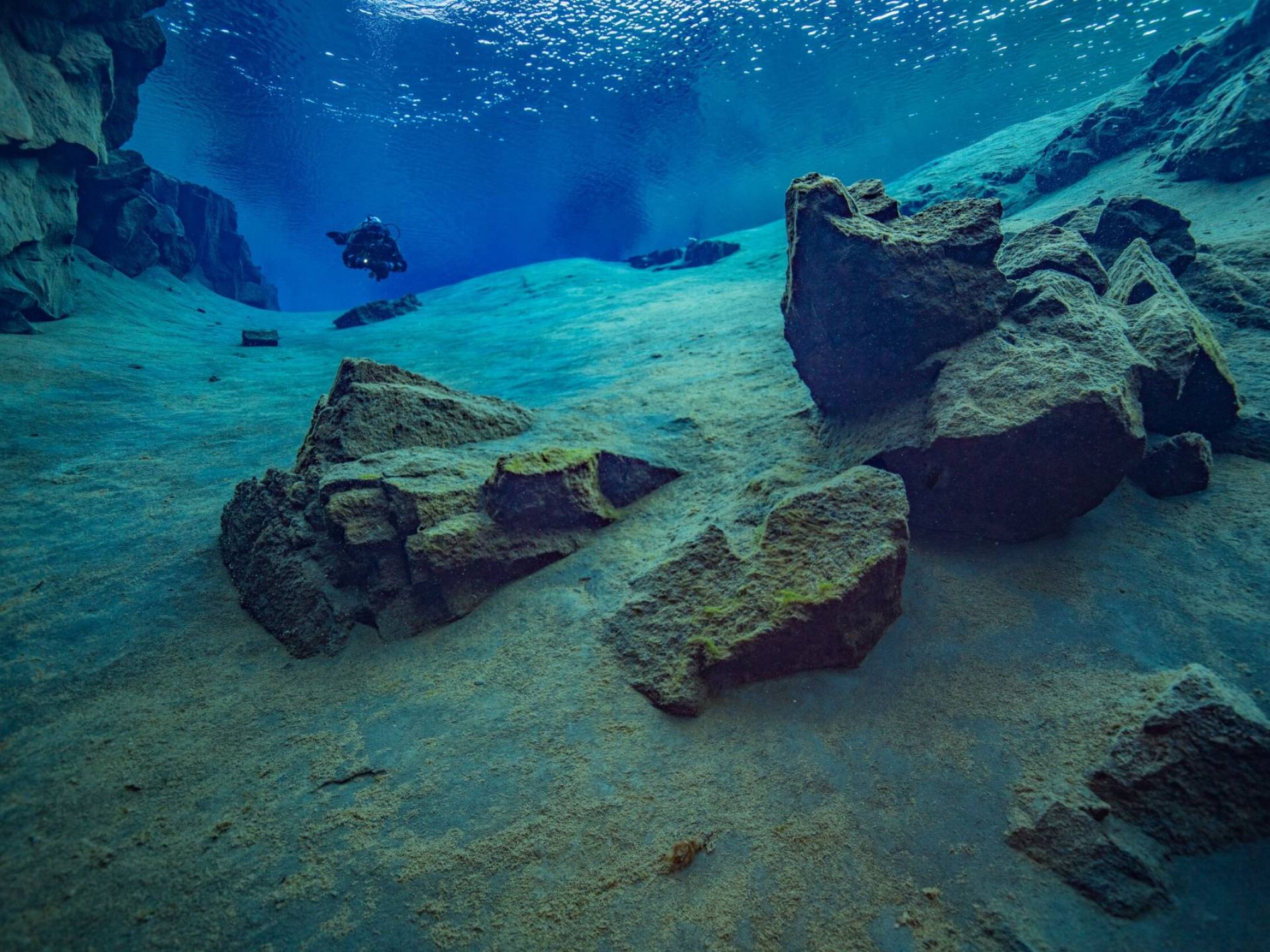
If you opt to dive in Silfra Fissure rather than snorkel, you open up a whole host of views that aren’t possible from the surface of the water. By having the ability to descend to the floor of the fissure, you can get a different perspective on the lava rock and underwater caves. Down at the bottom, the water remains crystal clear, so you can gaze up at the surface and truly appreciate the scale of this magnificent fissure and its incredible features. Even if you’ve experienced diving all over the world, this will feel different, a breathtaking space that is like nothing else on the planet.
What are the Silfra dive requirements?
Carrying out a Silfra tour comparison makes sense. Before you settle on one, looking at snorkeling versusdiving largely comes down to what skills you already have. A dive activity isn’t the best Silfra tour for beginners due to its skill requirements. If you carry a SCUBA dive certification card, such as a PADI Open Diver Water or equivalent, you’ll need to show it before embarking on a dive activity at Silfra Fissure.
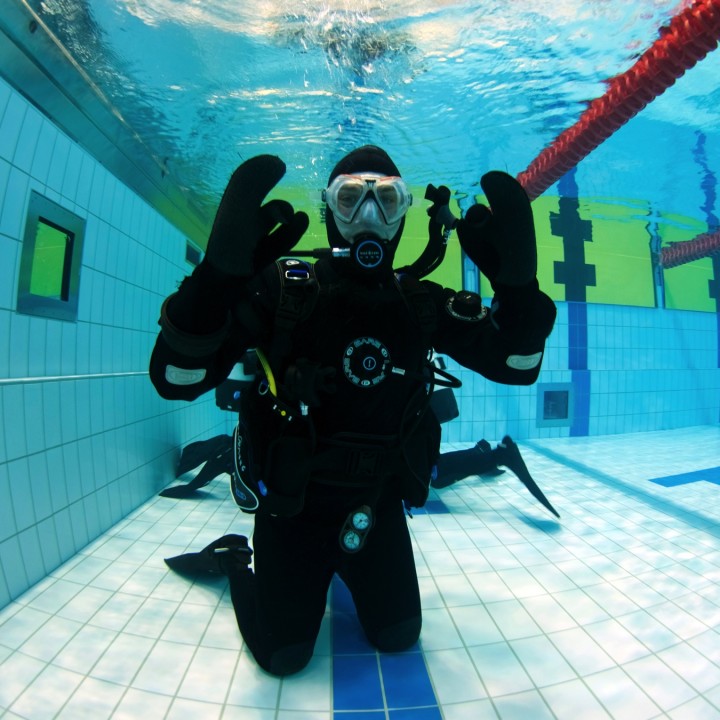
You’ll also need to be able to demonstrate proof of your dry suit diving certification or written proof from a diving instructor of ten logged dry suit dives within two years of your tour date. Safety is paramount, and so if you can’t prove that you’re a competent diver in this kind of environment, you won’t be able to go scuba diving at Silfra Fissure, simple as that.
However, there’s a workaround. If you aren’t yet qualified and are determined to dive Silfra Fissure, there’s still a way: book a course rather than a day tour. Obviously, this is a little more time-consuming, but if you want to spend your time in Iceland doing something a little different then it’s definitely something to consider. You’ll finish up with a new skill and a sense of accomplishment.
Dive.is offers a four-day programme which culminates in a Silfra dive. Sign up for the Nordic Diver Course and you’ll cover not only PADI Open Water requirements but also the dry suit specialty – the Silfra dive requirements. Once you’ve successfully completed this dual-certification course, you’ll be able to dive not just in Silfra Fissure but to 18 metres with a buddy anywhere in the world.
What should you wear for a snorkeling or diving Silfra experience?
Dry suit snorkeling at Silfra doesn’t require you to bring any special gear yourself. We’ll provide the dry suit and snorkel equipment. That said, we advise that you arrive at Silfra already dressed appropriately, which means donning a thermal base layer before you set out. You’ll probably have these with you if you have planned to be outdoors in Iceland for any length of time.
If you’re travelling in summer you might not have brought any with you – maybe this was a spur of the moment impulse booking? But don’t worry, anything close-fitting and warm will suffice. You might be able to get away with leggings or yoga pants, for instance, teamed with a long-sleeved T-shirt or lightweight sweater.
The same goes for your dive. Dress in long underwear, thick socks and whatever clothes would be suitable for that day’s weather. One thing to remember, though, is that some people find that a dry suit can be tight and restricting. We’d recommend you plan for this when you get dressed for the day. That way, you won’t find it too tricky to get the dry suit on at the start of your activity.
Can you easily pair Silfra Fissure with other sightseeing stops and activities?
In short, yes. Divers will no doubt be tempted to pair their Silfra Fissure excursion with Davíðsgjá. On our buddy tour, you’ll get to compare the two, seeing how the quieter and deeper Davíðsgjá contrasts with its more famous neighbour. The water tends to be a little warmer and you’ll often share it with lake trout!
Silfra Fissure’s location within Þingvellir National Park also means you’re ideally placed to explore a little further afield before or after your snorkeling activity. Often (especially in peak season) there’s a choice of departure times for those requiring a pickup from Reykjavik; if you plan on using your own transport activity start times prove even more flexible.
The main trio of attractions that constitute the Golden Circle can be visited within a half day thanks to their proximity to each other. The drama of Þingvellir’s Almannagjá gorge, Geysir Geothermal Area and Gullfoss waterfall are magnificent in their own right; viewed in the context of Silfra, the region’s geography makes a lot more sense.
Another popular combination is to add a horseback riding activity before you go snorkeling. Icelandic horses are just as unique as its terrain, as you’ll discover when you find yourself attempting a tölt – their curious, smooth fifth gait. It’s a fun way to see a little more of the countryside and make Icelandic memories.
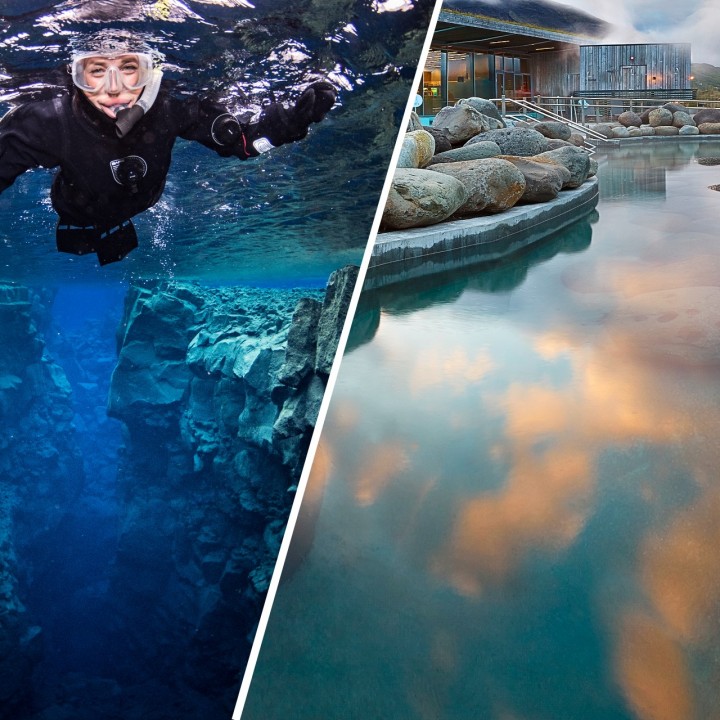
You might also consider pairing a cold plunge into the waters of Silfra Fissure with the cocooning warm waters of one of Iceland’s signature geothermal baths. Whether you choose to return to Reykjavik in between or stick around in the area is up to you.
Laugarvatn Fontana, Laugarás Lagoon and Secret Lagoon are just a few that are located in the Golden Circle region, or you could return to Reykjavik and head over to Sky Lagoon instead.
No matter which type of activity you book, snorkeling or diving tours at Silfra fissure both give you something that’s truly unique. This is going to be an unforgettable day and an experience you’ll be talking about for many years to come. Our diverse range of tours and expert knowledge of the location means that you can book with us and be confident that your high expectations will be met.
Forget confining yourself only to regular sightseeing: experiential travel is what sticks in the mind. If you’re looking for a holiday activity that is as extraordinary as it is unique, then you can’t go wrong with one of our snorkeling or diving excursions in Silfra Fissure. It’s the perfect way to switch up your perspective on Iceland’s unusual geology in one of the country’s most splendid locations. Why not lock in your plans today?