Everything You Need to Know as a Beginner Diver and Snorkeler
Everything You Need to Know as a Beginner Diver and Snorkeler
If you’re new to underwater activities, snorkeling and scuba diving offer two very different starting points. Snorkeling for beginners requires less training and equipment, with most of the experience taking place at the surface. Scuba diving for beginners involves formal training and more technical skills, but allows you to descend and stay underwater longer.
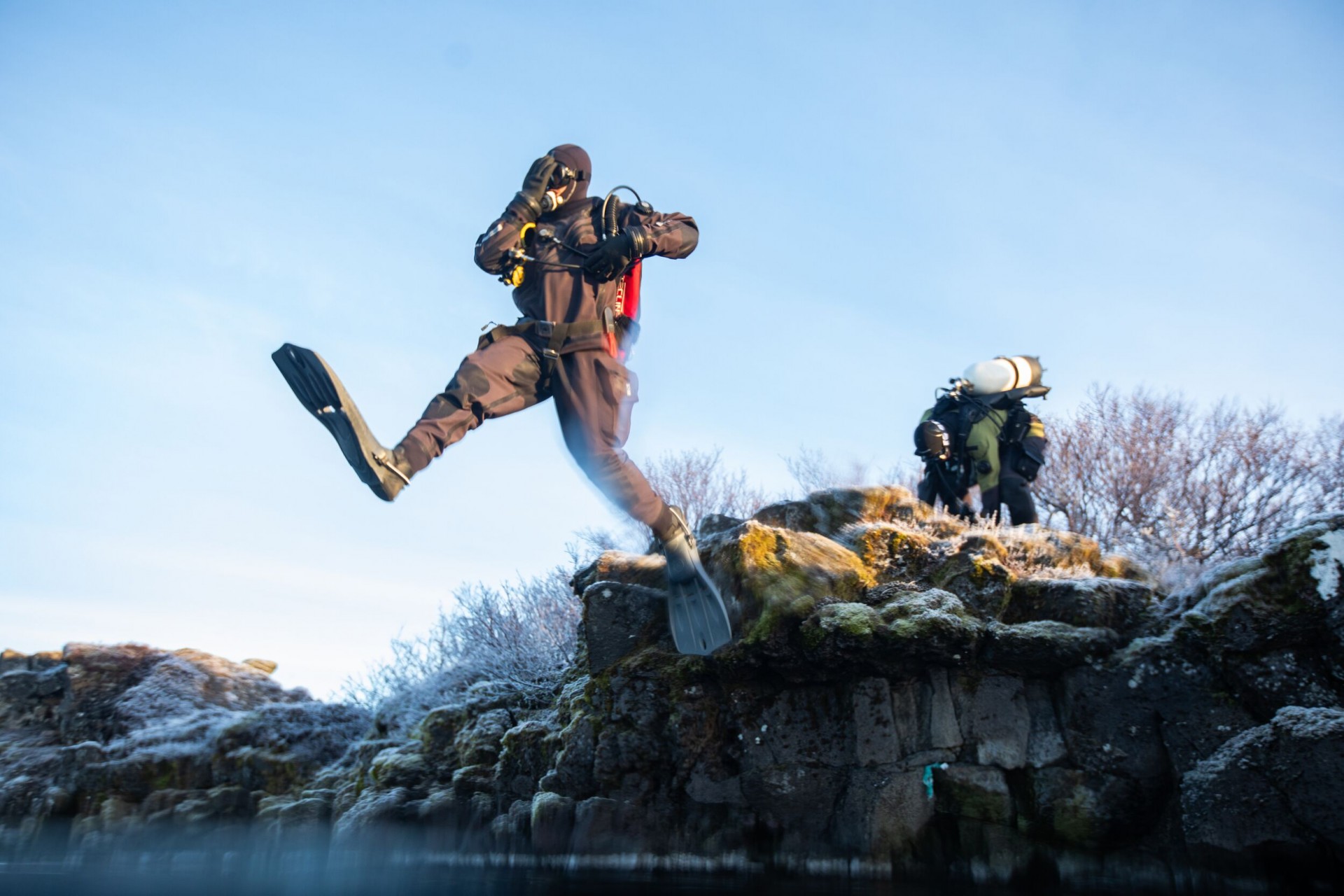
Silfra at Þingvellir National Park offers a useful example of both experiences in the same cold-water environment. DIVE.IS has guided snorkelers and scuba divers here since 1997, providing decades of firsthand experience with both activities.
Drawing on that experience, this guide compares snorkeling vs scuba diving based on training, skills, equipment, depth, and time commitment. It explains what beginners can expect from each and what to consider when deciding where to start.
Snorkeling vs Scuba Diving: What's the Difference?
The main difference between snorkeling and scuba diving is how you explore underwater. Snorkelers remain mostly at the surface and breathe through a snorkel, while scuba divers carry their own breathing gas, allowing them to descend and stay underwater for longer periods.
Snorkeling
Snorkeling is primarily a surface-based activity. You breathe through a snorkel that draws air from above the water while using a mask and fins to explore below the surface. Brief breath-hold dives are possible, but most of the experience takes place at or near the surface.
No formal certification is required, and basic instruction is usually enough to get started. Equipment is also relatively simple, typically consisting of a mask, snorkel, fins, and appropriate exposure protection.
This makes snorkeling a good option for beginners who want an accessible way to see marine life and underwater landscapes without committing to extensive training.
Scuba Diving
Scuba diving allows you to explore below the surface and at greater depths. Divers breathe through a regulator connected to a scuba tank and use additional equipment such as a buoyancy control device (BCD), weights, and a dive computer.
Unlike snorkeling, scuba diving requires structured training and certification for independent recreational diving. With a standard beginner Open Water Diver certification, divers can typically descend to depths of up to 18 m (60 ft).
Scuba diving requires more training, equipment, and preparation, but it also provides much greater access to the underwater world. With further training, divers can progress to environments such as deeper reefs, wrecks, and cold-water dive sites.
The biggest difference comes down to how much of the underwater environment you can explore. Snorkeling gives you a view from the surface, while scuba diving allows you to spend more time below it and explore at depth.
Which Is Easier to Learn: Snorkeling or Scuba Diving?
Snorkeling is generally easier to learn than scuba diving. There are fewer skills to master, less equipment to manage, and most of the experience takes place at the surface.
For first-time snorkelers, one of the main adjustments is breathing through the mouth while the face is submerged. Beginners typically learn a few basic snorkeling skills:
-Breathing comfortably through a snorkel
-Using fins and maintaining a good body position
-Clearing water from the snorkel
These skills can usually be introduced during a short briefing and practice session.
Scuba diving has a steeper learning curve because several skills must work together underwater. Beginner scuba diving typically covers:
-Breathing continuously through a regulator
-Equalizing your ears during descent
-Clearing your mask underwater
-Controlling your buoyancy
-Communicating with hand signals
-Managing and checking your equipment
One of the most common adjustments for new divers is learning to relax their breathing and movements underwater. DIVE.IS beginner dive courses introduce these skills progressively, with practice in controlled conditions before applying them during open-water dives.
How Deep and How Long Can You Go Snorkeling vs Scuba Diving?
Snorkelers generally remain at the surface. With appropriate skills, you can briefly hold your breath and dive below it. However, a snorkel does not provide air underwater. Even a dry snorkel only helps prevent water from entering the tube when submerged.
Scuba divers carry their own breathing gas, allowing them to remain underwater and explore at greater depths. A standard Open Water Diver certification generally trains recreational divers to depths of up to 18 m (60 ft). With further training, the recreational diving limit can extend to 40 m (130 ft).
How long a scuba dive lasts depends on several factors. Depth, breathing rate, tank size, workload, conditions, and the dive plan can all affect your time underwater. This is why a scuba tank does not translate into a fixed number of minutes below the surface.
Good to know: Longer, deeper dives increase nitrogen absorption. Divers therefore need time before flying, with 24 hours commonly used as a conservative guideline.
How Much Training Do You Need for Snorkeling vs Scuba Diving?
Snorkeling requires no formal certification. On a guided experience, beginners usually receive a safety briefing and practice before entering the water. Preparation can vary by environment, especially in cold water, currents, or other challenging conditions.
Scuba diving requires more structured training. If you want to try scuba before becoming certified, programs such as PADI Discover Scuba Diving teach the basics under professional supervision. This is an introductory experience, not a certification course.
To become a certified recreational diver, you need to complete an entry-level course such as Open Water Diver. Courses are available through training organizations, including PADI, SSI, SDI, and NAUI. A typical course takes around 3–4 days and covers:
-Dive theory: Pressure, equipment, dive planning, and safety principles.
-Confined-water training: Essential scuba skills practiced in a pool or controlled environment.
-Open-water dives: Supervised dives where you apply those skills in open water.
Some courses allow you to complete the theory online before beginning practical training. Once certified, you can build on these foundations with further training in areas such as deeper diving, wreck diving, or dry suit diving.
What Equipment Do You Need for Snorkeling vs Scuba Diving?
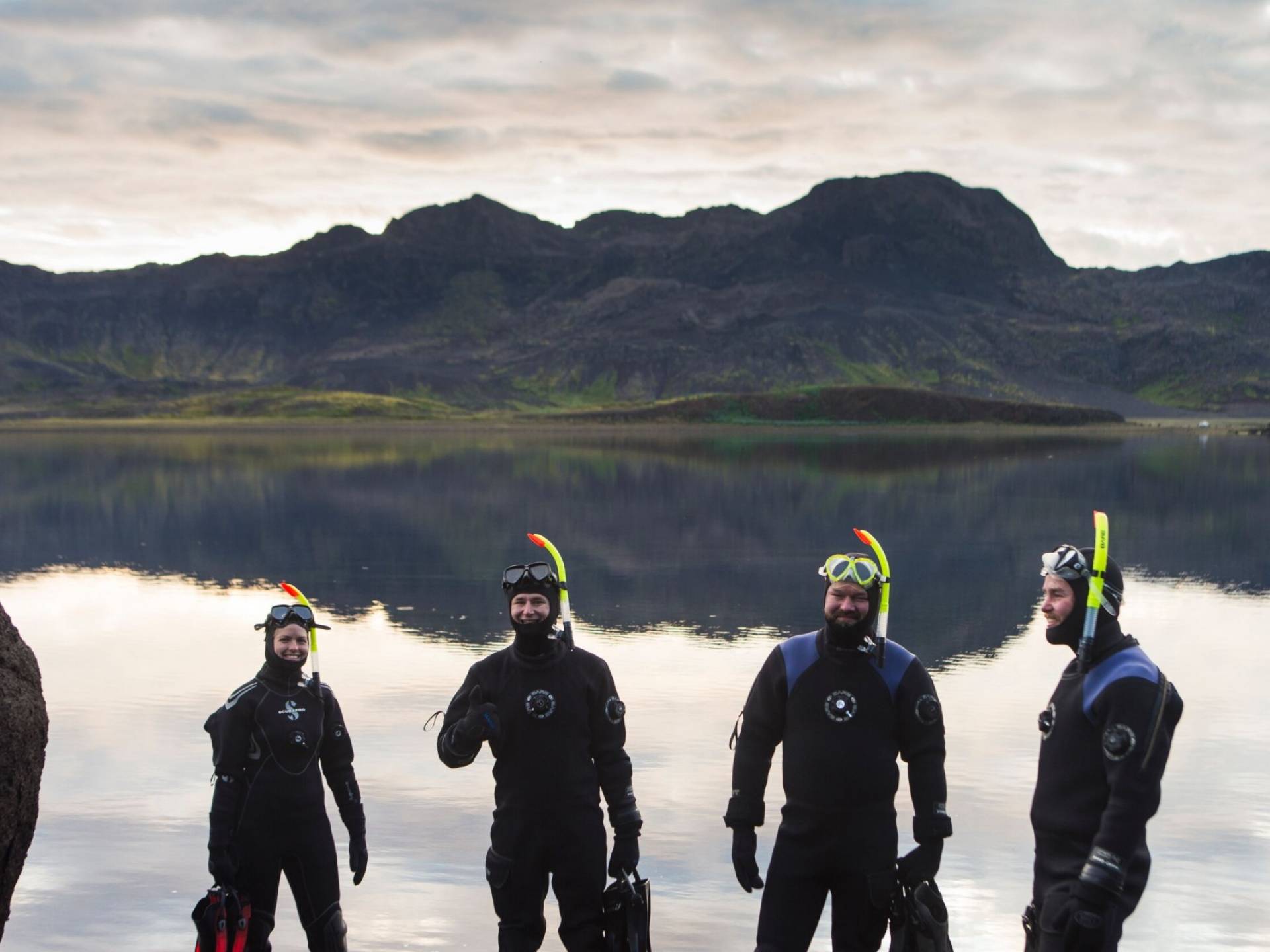
Snorkeling for beginners requires relatively little equipment. A basic setup usually includes:
-Snorkel mask: Provides clear vision underwater
-Snorkel: Allows you to breathe at the surface
-Fins: Help you move efficiently through the water
-Exposure protection: A rash guard, wetsuit, or dry suit
Some snorkels include a purge valve for easier clearing or a dry mechanism to help keep water out. An inflatable snorkeling vest can also be used for additional support.
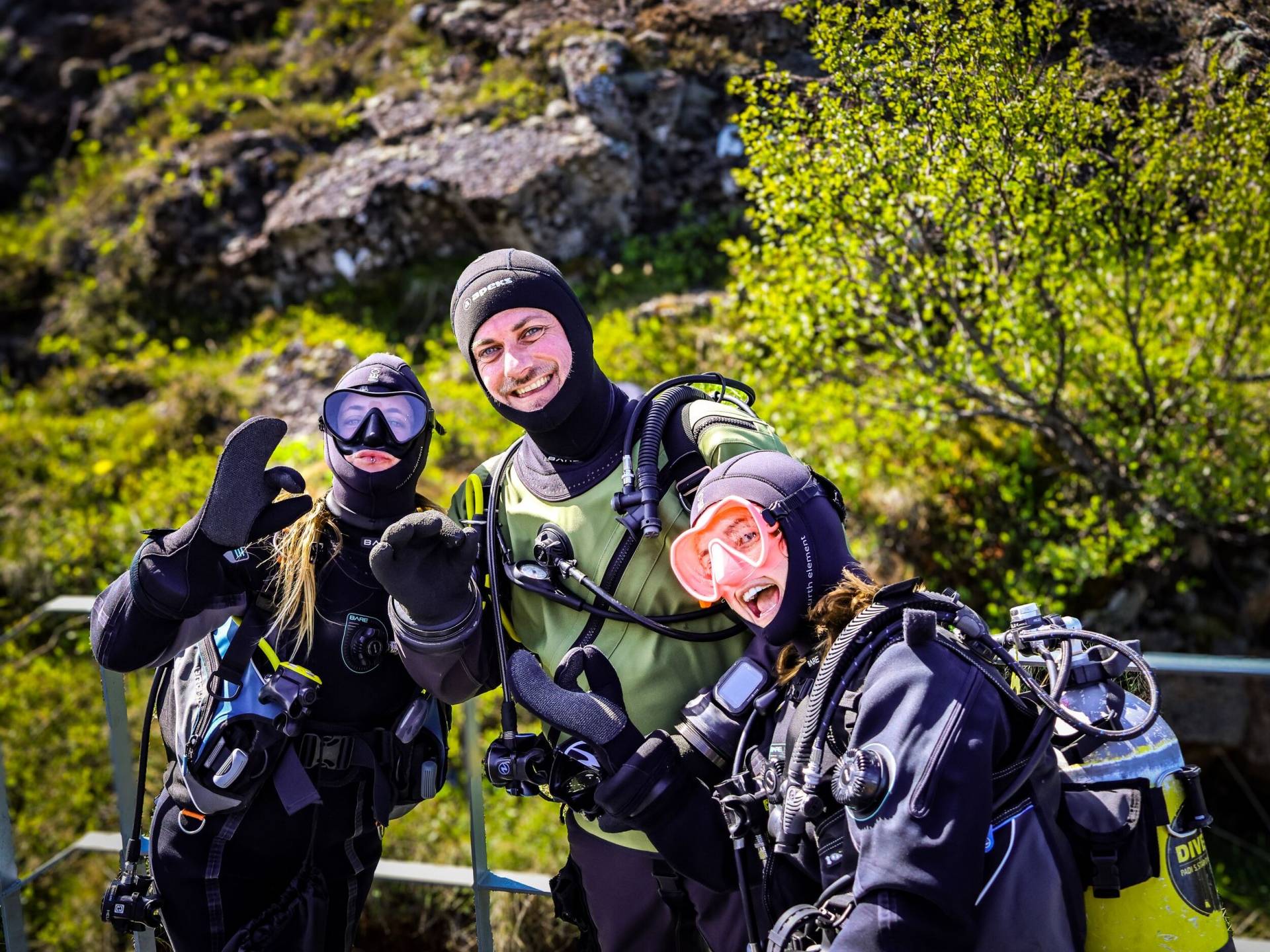
Scuba diving requires more equipment. Along with a mask, fins, and exposure protection, a typical setup includes:
-Regulator and scuba tank: Supply breathing gas
-BCD and weights: Help you control buoyancy
-Dive computer: Monitors depth and dive time
Learning to assemble, check, and use this equipment is part of beginner scuba training.
Snorkeling and Scuba Diving at Silfra: What Makes It Unique and How Do They Compare?
Silfra is a freshwater fissure in Þingvellir National Park, about an hour's drive from Reykjavík. It lies within the rift zone between the North American and Eurasian tectonic plates. It’s the only place in the world where you can swim between two tectonic plates. This makes Silfra a once-in-a-lifetime experience for both snorkelers and scuba divers.
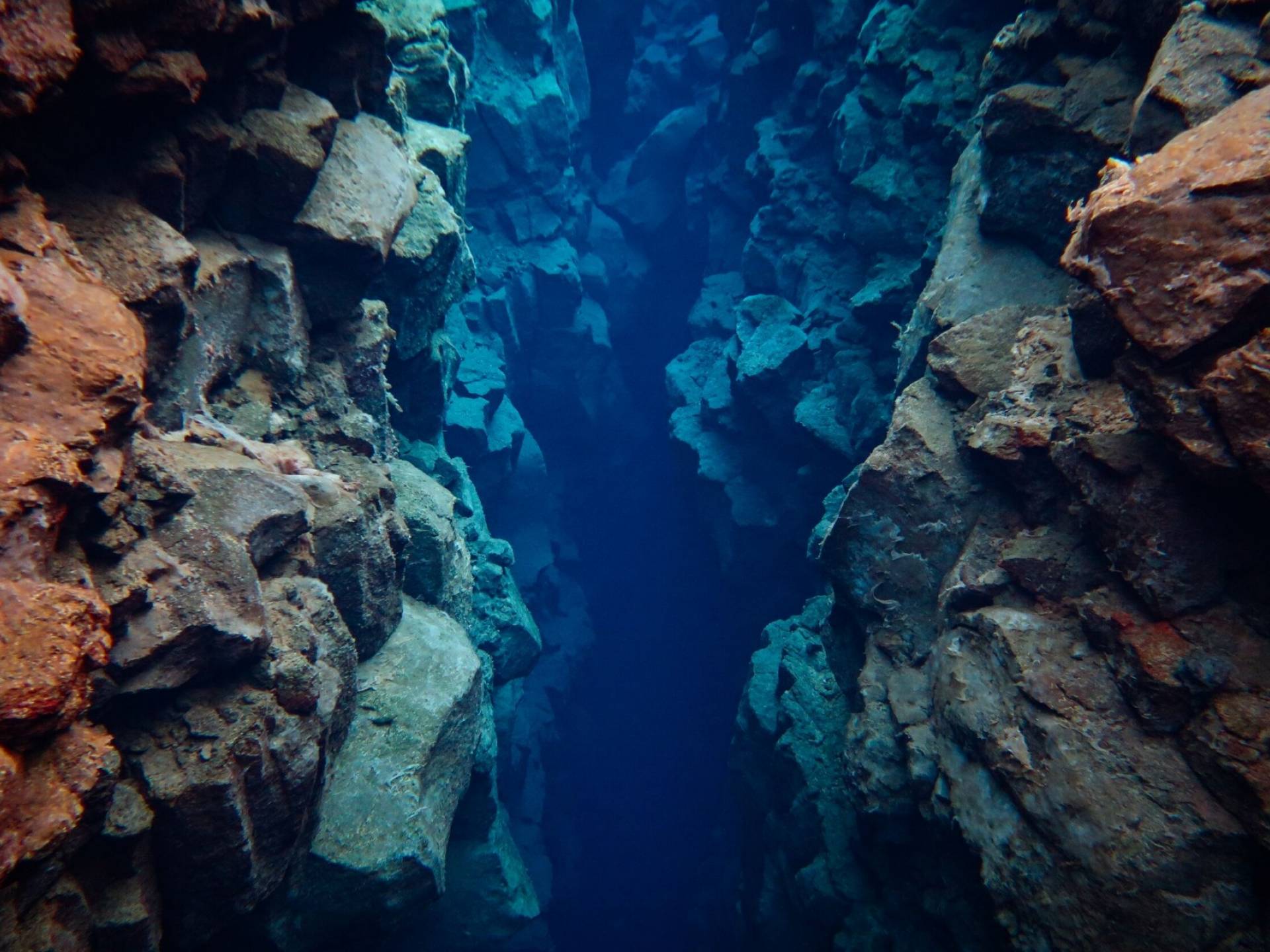
Silfra's water filters underground through porous lava for decades before reaching the fissure. This natural filtration creates exceptional clarity, with visibility that can exceed 100 m (328 ft). The water remains around 2–4°C (35–39°F) year-round. Constant groundwater flow prevents Silfra from freezing, allowing snorkeling and scuba diving throughout the year.
Here’s what to expect from Silfra snorkeling vs Silfra diving.
What Do Snorkelers and Scuba Divers See at Silfra?
Both snorkelers and scuba divers pass through Silfra Big Crack, Silfra Hall, Silfra Cathedral, and Silfra Lagoon. Along the route, you can see the fissure walls and bright green algae known as “troll hair.”
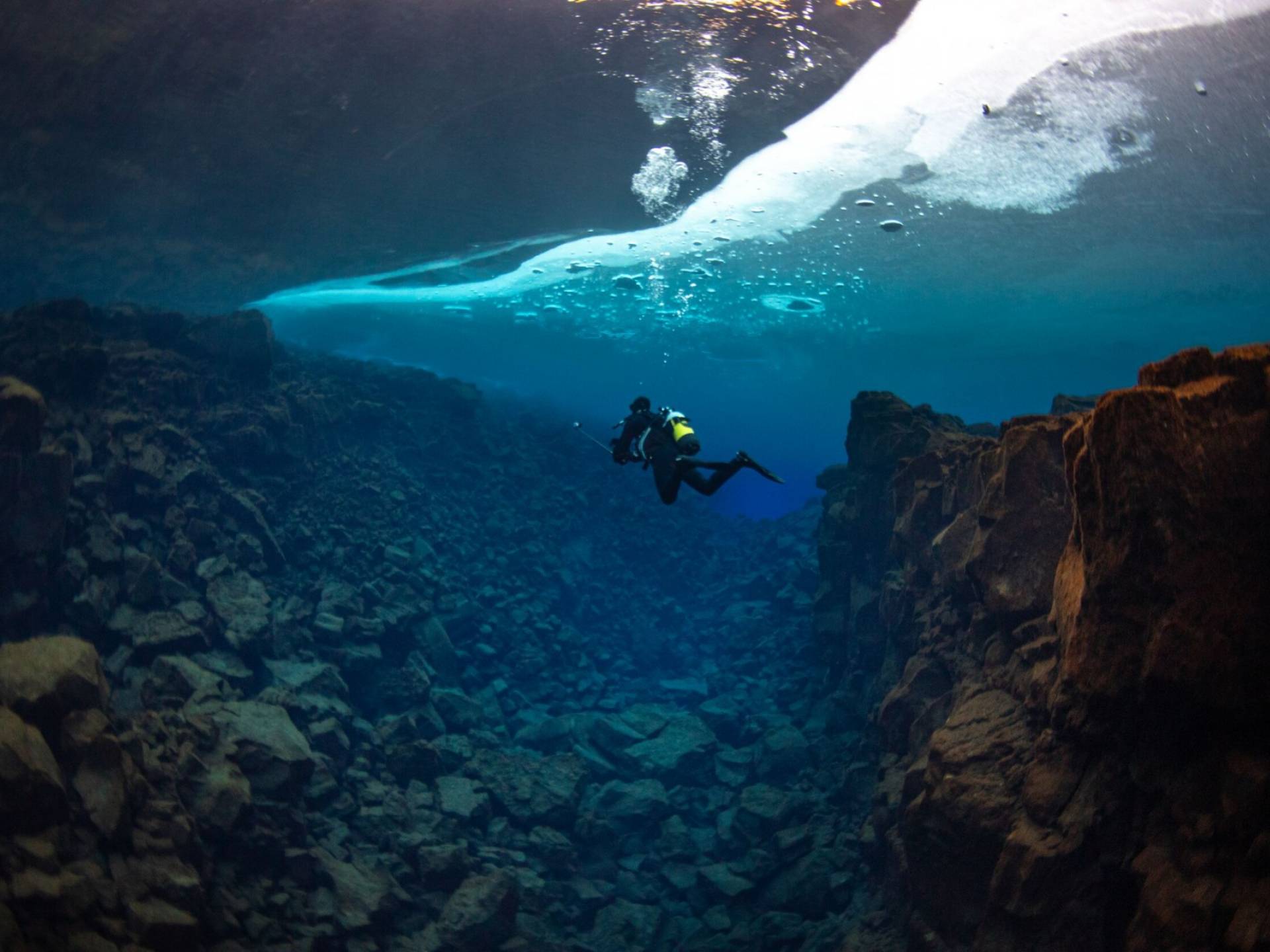
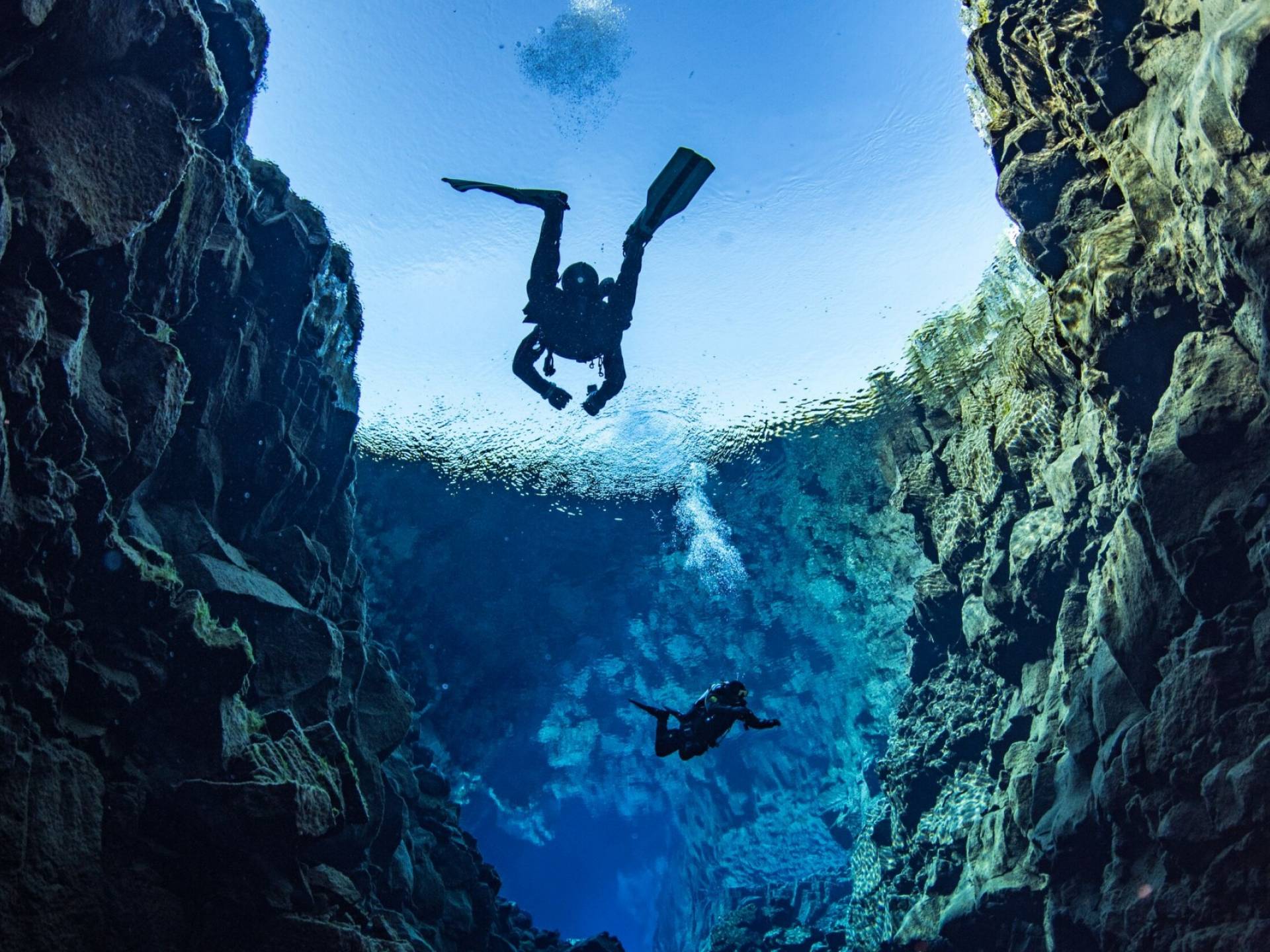
The main difference is perspective. Snorkelers look down into the fissure from the surface, while scuba divers explore below it and alongside the rock walls.
What Is Snorkeling at Silfra Like for Beginners?
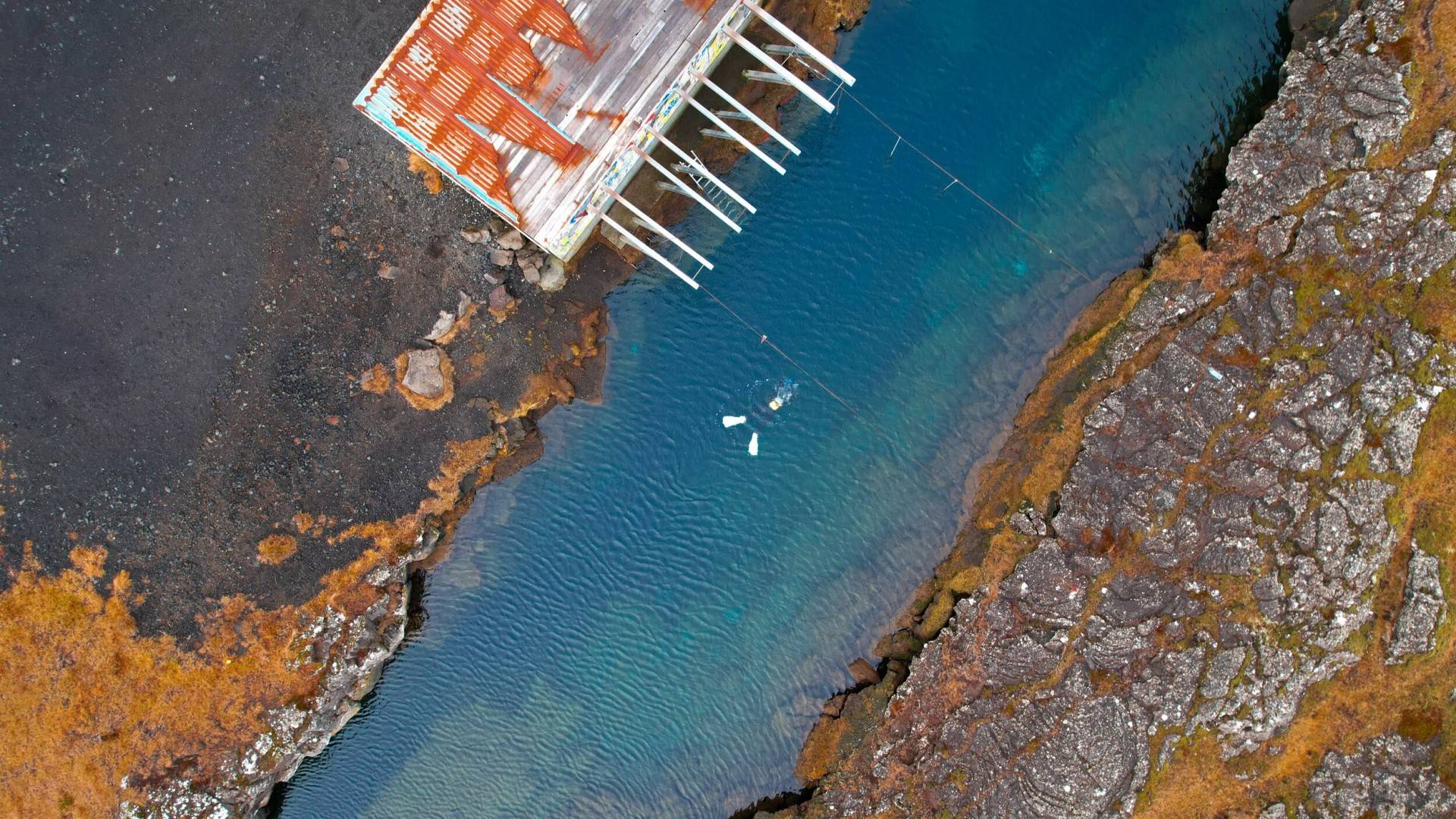
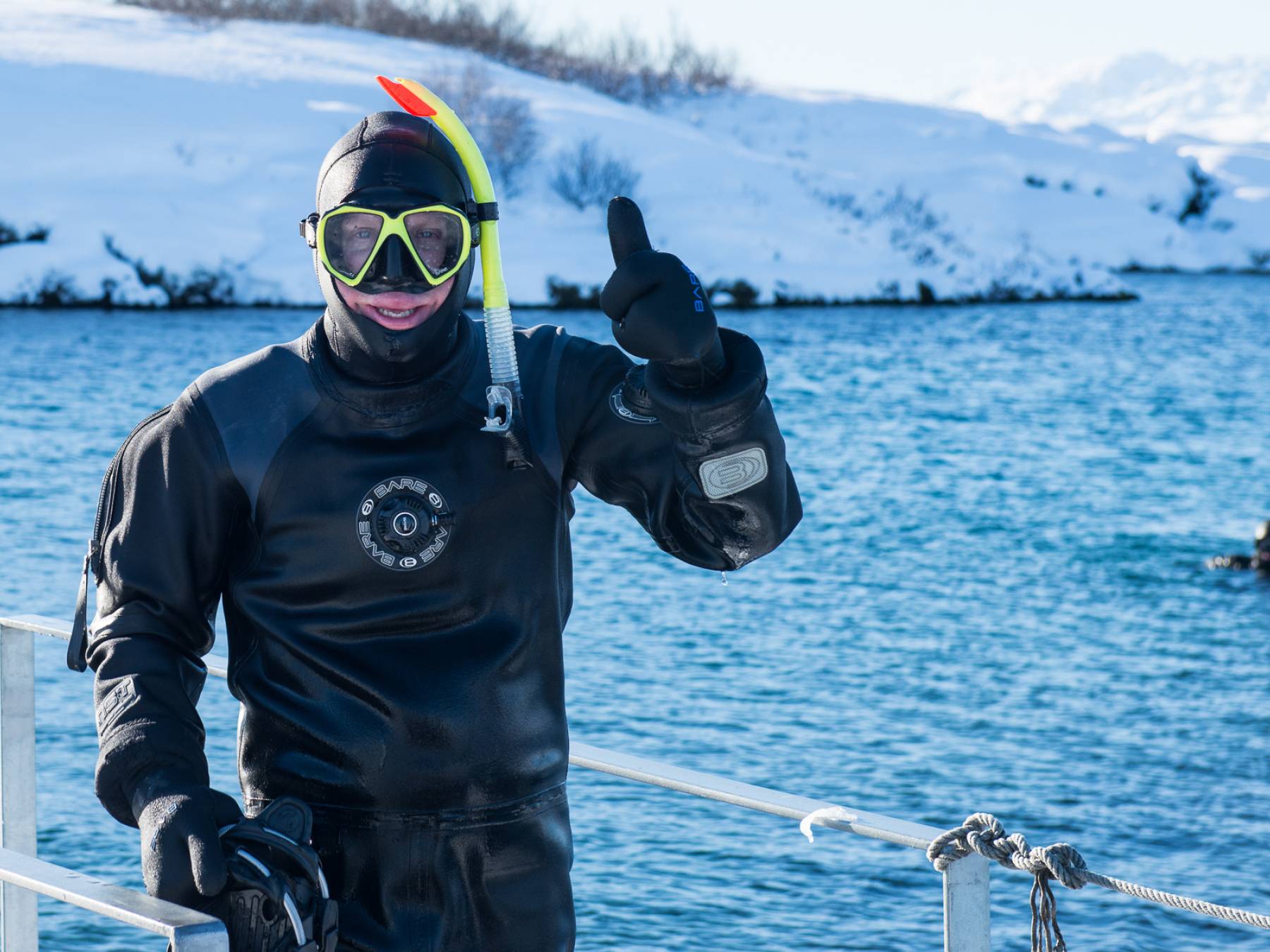
No previous snorkeling experience is required to join a Silfra snorkeling tour. Before entering the water, your guide explains how to use the equipment and move comfortably through the fissure. Each guide takes a maximum of six snorkelers.
DIVE.IS provides all the necessary snorkeling equipment, including a dry suit. You only need to bring suitable base layers and warm socks to wear underneath.
The dry suit provides thermal protection and buoyancy, helping you float at the surface. Most of your body stays dry, although your hands and parts of your face remain exposed.
What Is Scuba Diving at Silfra Like?
Silfra isn’t a beginner scuba dive. Divers must meet several requirements, including:
-Certification: Open Water Diver certification or equivalent
-Dry suit experience: Dry suit certification or 10 recently logged dry suit dives within the past two years.
DIVE.IS takes a maximum of three divers per guide. The maximum permitted depth is 18 m (60 ft), although most of the dive takes place around 7–12 m (23–39 ft).
A typical Silfra diving tourlasts around three hours, with approximately 30–45 minutes spent underwater.
Dry suit experience is important because air inside the suit expands and compresses with depth, affecting buoyancy and body position. Divers must manage this alongside their BCD.
Tip: Already certified but don’t have the required dry suit experience yet? You can complete a PADI dry suit course with DIVE.IS before diving at Silfra.
Should You Try Snorkeling Before Learning to Scuba Dive?
You don’t need to snorkel before learning to scuba dive. Beginner scuba courses are designed for people with no previous scuba experience.
However, snorkeling can be a useful introduction if you’re new to underwater activities. It can help you get comfortable wearing a mask and fins, breathing through your mouth, and moving through the water. This familiarity may make your first scuba diving experience feel more natural.
Think of snorkeling as an optional introduction, not a prerequisite. If scuba diving is your goal, you can start with a beginner scuba course without learning to snorkel first.
Snorkeling or Scuba Diving: Which Should You Choose?
Choosing between snorkeling and scuba diving comes down to the experience you want and the commitment you’re ready to make. Snorkeling for beginners offers a quicker, more accessible introduction. Meanwhile, scuba diving for beginners requires more training but gives you greater access below the surface.
Consider your comfort level, available time, and how you want to experience the underwater world. You can start with either activity and build your skills as you gain more experience.
Looking for another unique snorkeling experience in Iceland? Visit Lake Kleifarvatn, where you can snorkel above underwater geothermal springs.
FAQs
Do I need to be a strong swimmer to snorkel or scuba dive?
No, you don’t need to be a strong swimmer, but you should at least be comfortable in the water. Swimming and fitness requirements vary by activity, course, and operator, so always check before booking.
Are there age limits for snorkeling and scuba diving?
Yes, age requirements vary by activity, dive site, and operator. At DIVE.IS, Silfra snorkeling is available from age 12, while Silfra scuba diving requires divers to be at least 17.
What should you wear under a wetsuit or dry suit?
A swimsuit is usually worn under a wetsuit. Under a dry suit, wear long, warm base layers or thermal undergarments with thick socks.
What should you eat before snorkeling or scuba diving?
Eat a light, balanced meal and stay hydrated before entering the water. Avoid very heavy meals immediately beforehand, particularly if you’re prone to motion sickness.
Can you snorkel or scuba dive if you wear glasses or contact lenses?
Contact lenses can generally be worn with a snorkel or scuba mask. If you normally wear glasses, a prescription mask is another option.