Top Things to do on the Reykjanes Peninsula
The Reykjanes Peninsula is one of the most geologically active regions in Iceland. Located near Keflavík International Airport, it offers a compact experience of the country’s volcanic landscapes, geothermal activity, and rugged coastline.
Many travelers pass through Reykjanes on their way to Reykjavík without realizing how much there is to see. From recent volcanic eruptions to steaming geothermal areas, the peninsula offers a clear view of the natural forces shaping Iceland.
Whether you’re visiting for a day or two, this guide covers the top things to do on the Reykjanes Peninsula. Plus, some practical tips to help you make the most of your time. So, shall we?
Explore Reykjanes’ Active Volcanic Landscape
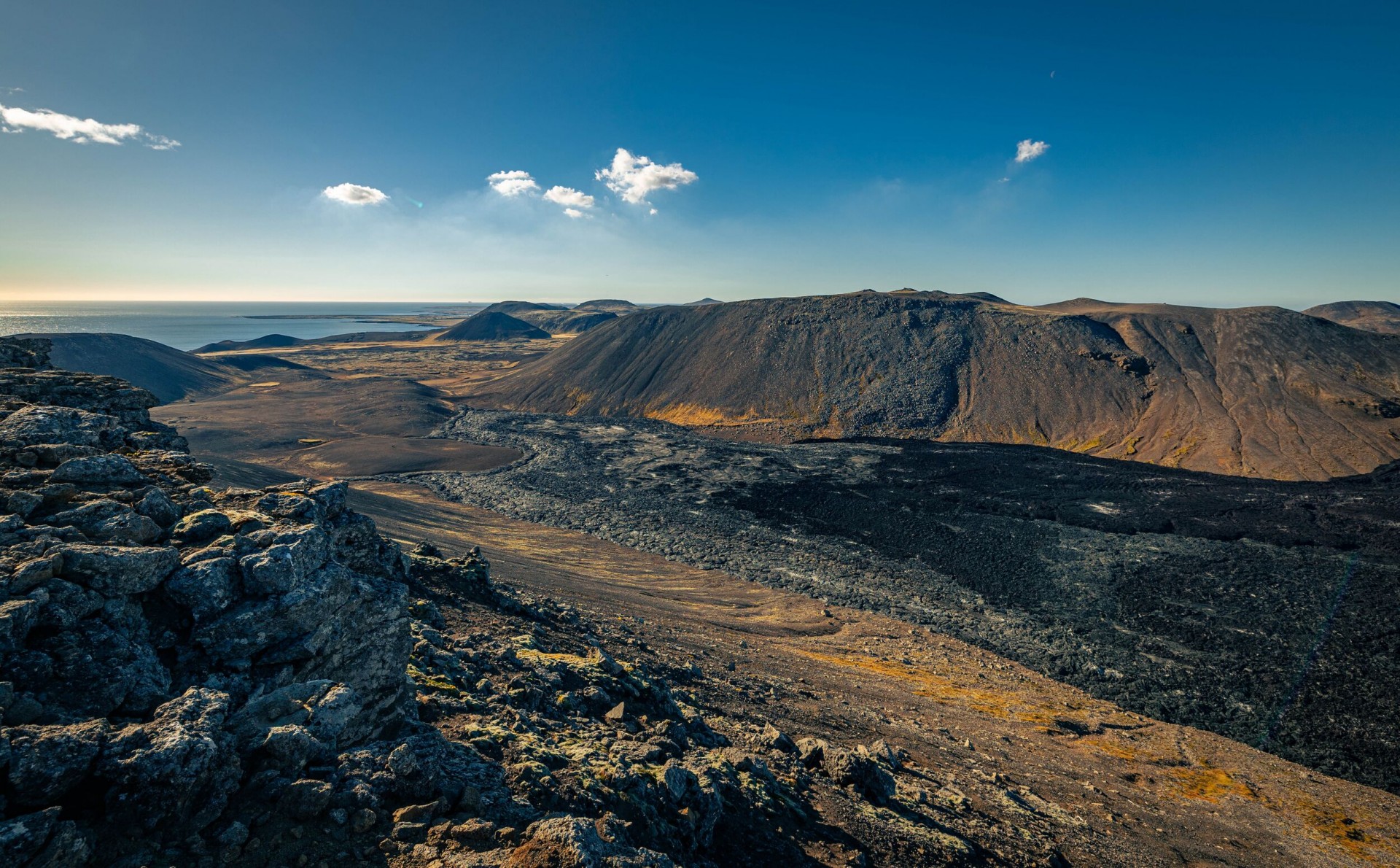
The Reykjanes Peninsula has seen a renewed period of volcanic activity in recent years. The first eruption in this cycle began in March 2021 at Fagradalsfjall, marking the region’s first eruption in nearly 800 years.
Additional eruptions followed in 2022 and 2023, creating new lava fields and reshaping the terrain. More recent activity has shifted toward the Sundhnúkur crater row (2023–2025) near Grindavík, where fissures and lava flows have affected nearby areas.
Note: While eruptions aren’t constant, the peninsula remains an active volcanic zone. Experts continue to monitor conditions closely, and future eruptions are possible.
Touring the Fagradalsfjall Volcano area
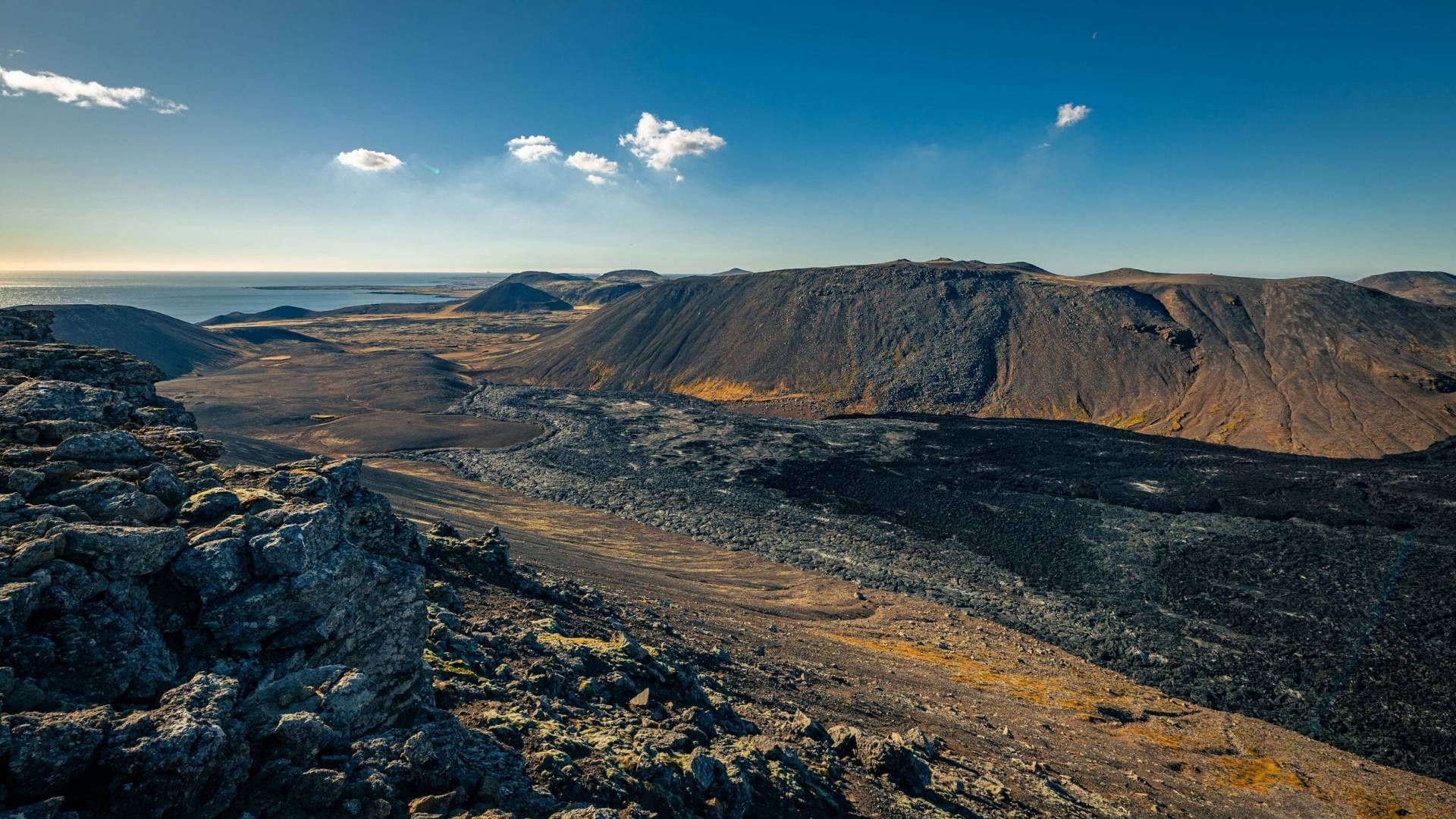
The Fagradalsfjall Volcano area is now one of the most popular attractions on the Reykjanes Peninsula. Even without an active eruption, it offers a rare opportunity to explore newly formed lava fields and volcanic terrain.
There are several ways to explore the Fagradalsfjall eruption sites:
Guided hiking tours for structured routes and added safety
Super Jeep tours for access to more remote terrain and viewpoints
Helicopter flights for a full view of lava fields and crater systems
Safety reminder: Check official updates before visiting and follow marked trails at all times.
Visiting Grindavík
The town of Grindavík is located near recent volcanic eruption sites and is a practical stopover before or after a volcano tour. Even if you don’t visit the eruption sites directly, you can still see their effects within the town.
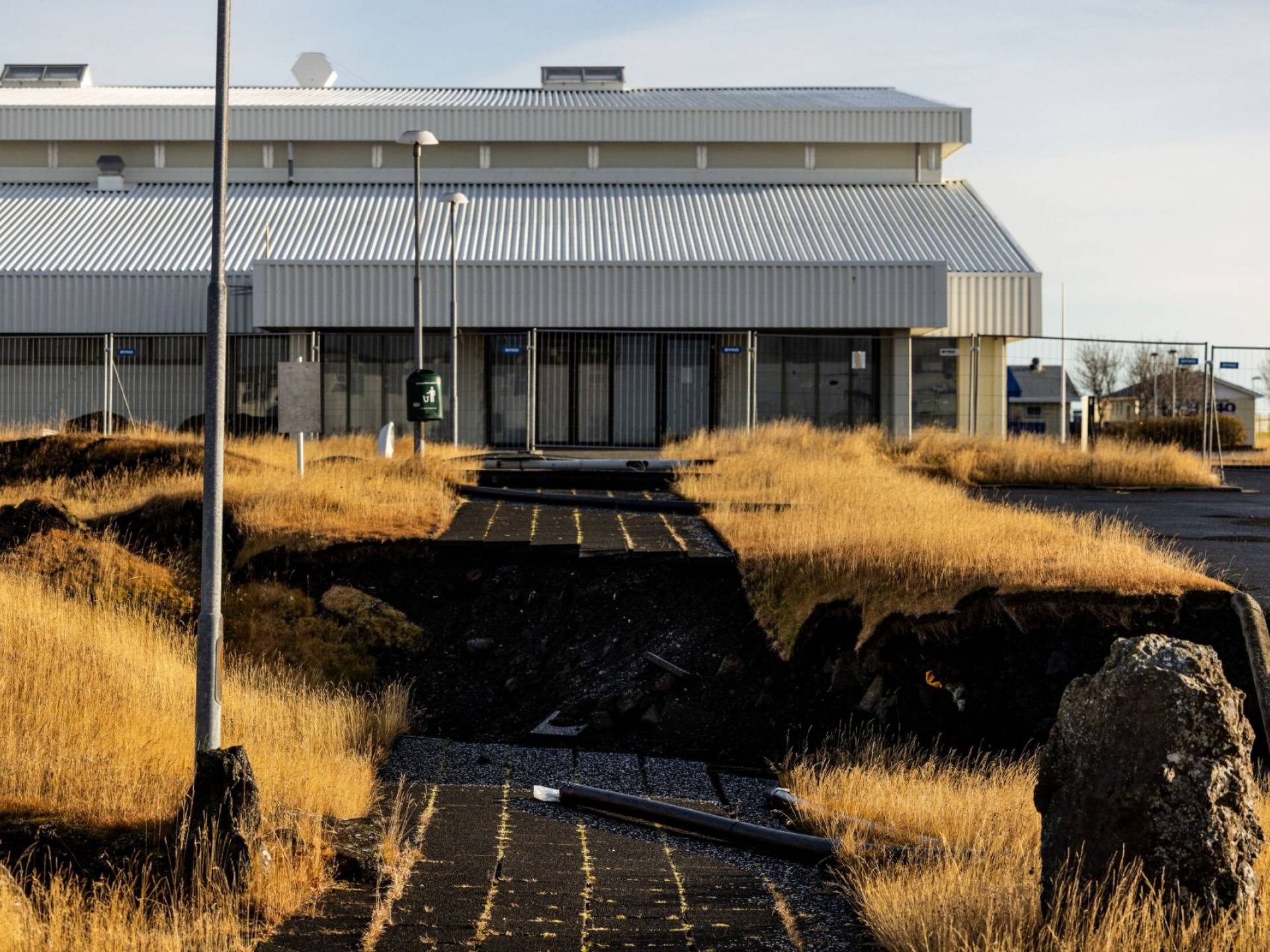
On Efrahóp Street, cooled lava from early 2024 extends toward residential areas. Three houses were damaged as it reached the edge of the street. At Salthúsið Restaurant, cracks caused by seismic activity run directly through the building’s floor, forcing it to close. These areas are barricaded for safety, but the extent of the damage remains visible from the street.
Beyond the affected sites, Grindavík also offers:
Local cafés and seafood restaurants
A scenic harbor area for coastal walks
Community facilities such as a public swimming pool
It’s a good place to understand how recent volcanic activity has changed the area. It also offers a chance to experience a more local side of the Reykjanes Peninsula.
Visit the Top Attractions in the Reykjanes Peninsula
The Reykjanes Peninsula offers a range of natural and cultural attractions, many of which are easy to visit in a single trip. From geothermal areas to coastal viewpoints, these sites highlight the region’s diverse landscapes and geological features.
1. Blue Lagoon
The Blue Lagoon is one of Iceland’s most well-known attractions. Set within a lava field near Grindavík, this geothermal spa is known for its milky-blue water and mineral-rich composition.
Despite its popularity, it remains a worthwhile stop, especially early in the morning or later in the evening when it’s less crowded. In addition to the main lagoon, it features saunas, steam rooms, and a range of in-water treatments.
Fun fact: The water in the Blue Lagoon comes from the runoff of the nearby Svartsengi Geothermal Power Station.
2. Bridge Between Continents
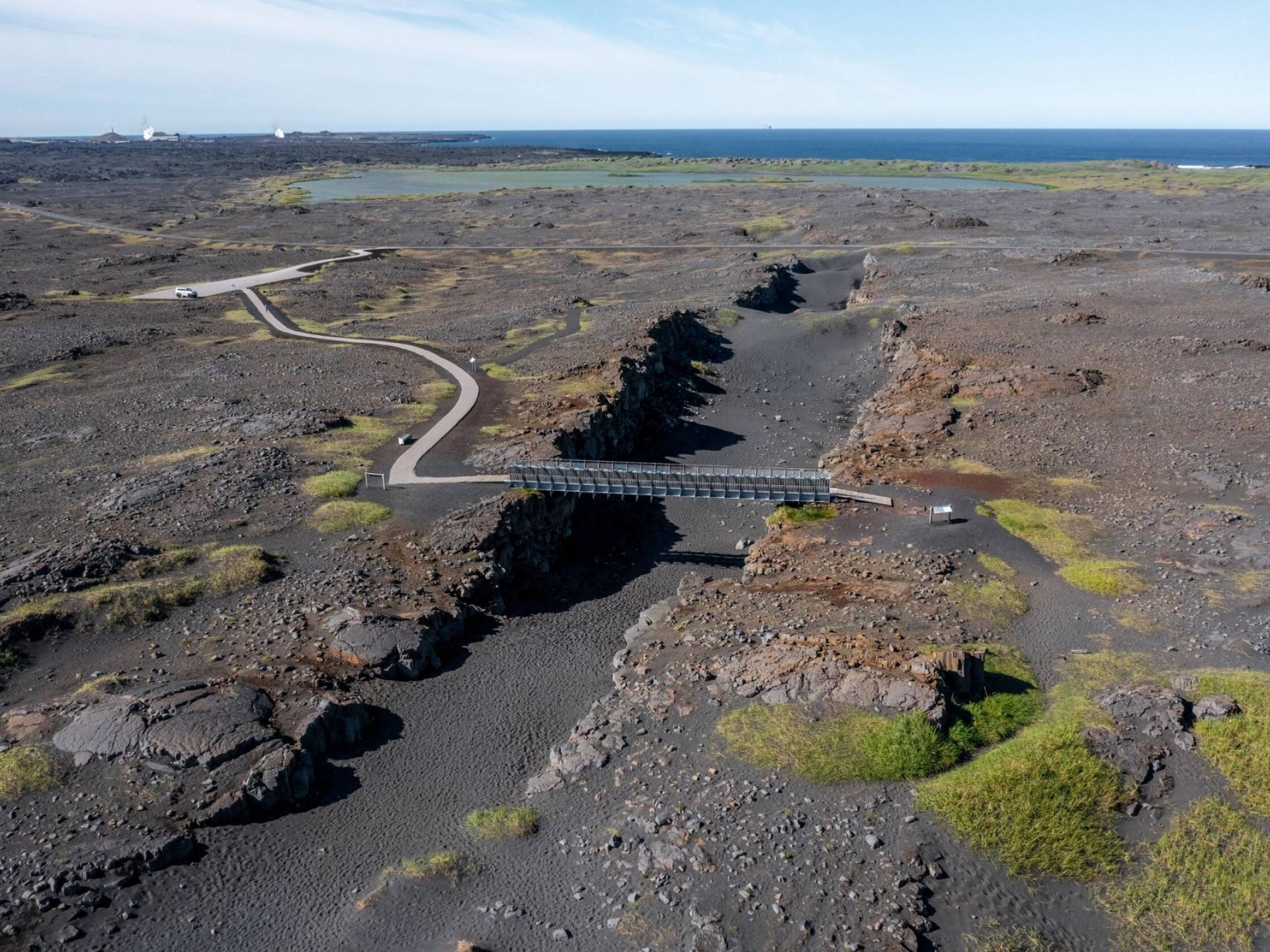
The Bridge Between Continents marks a symbolic crossing between the North American and Eurasian tectonic plates. While the physical gap is modest, the concept makes it a quick and interesting stop.
You can walk across the bridge and even pick up a certificate as a souvenir to mark your crossing between continents. It’s a short visit, but worth including in your route.
3. Gunnuhver Hot Springs
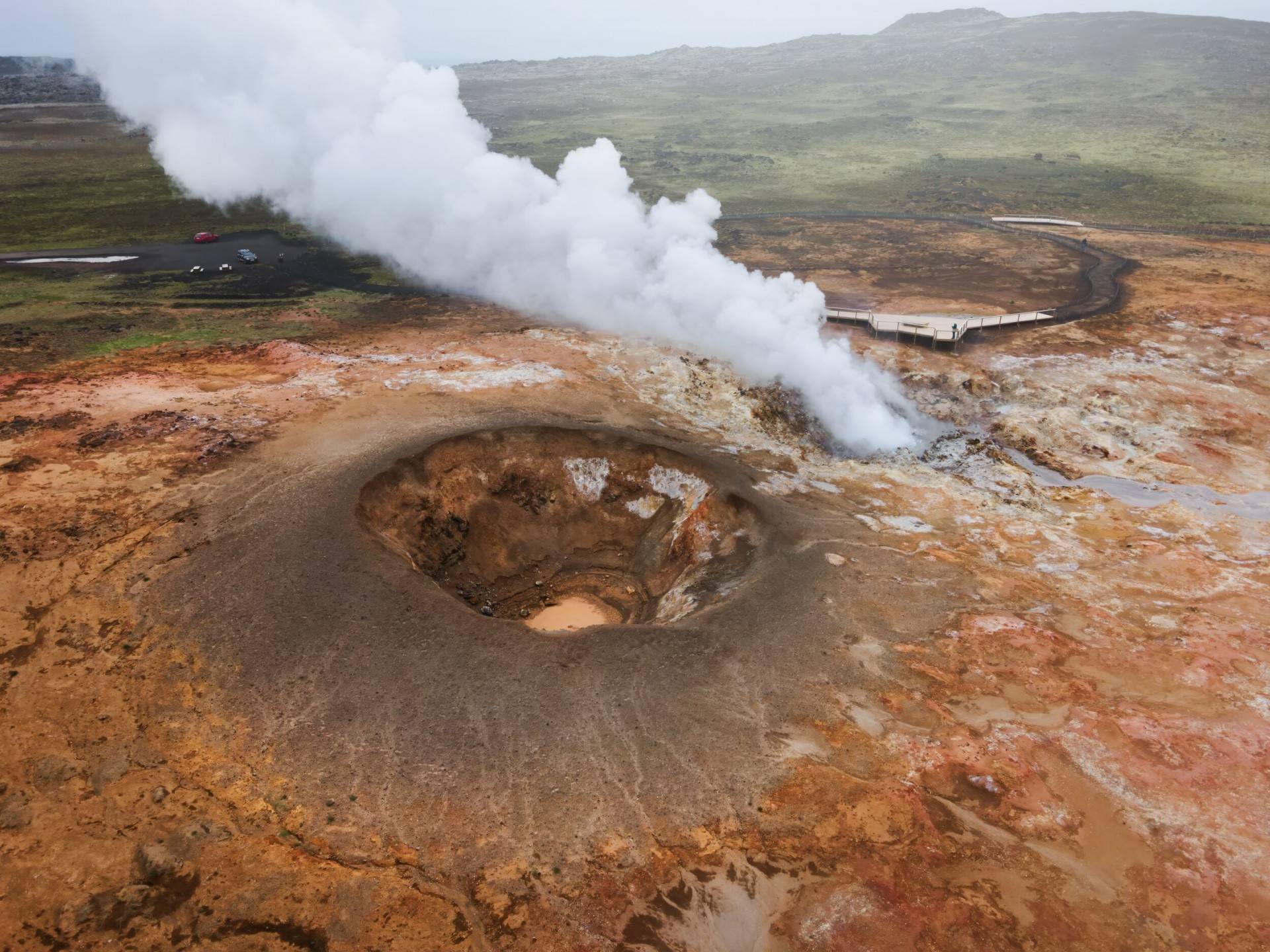
Gunnuhver is one of the most active geothermal areas on the Reykjanes Peninsula. Large steam vents and boiling mud pools release constant geothermal energy, which you can observe safely from designated viewing paths.
The area has a strong sulfur smell, often described as similar to eggs. The site is also tied to a local ghost story about Gunna, a restless spirit. According to legend, she was lured into the area around 400 years ago after causing great disturbance.
4. Valahnúkamöl
Valahnúkamöl is a rugged coastal area at the southernmost part of the Reykjanes Peninsula. It’s defined by a prominent boulder ridge shaped by volcanic activity and constant ocean exposure.
Waves regularly crash against the shoreline, creating a strong contrast with the dark lava formations. You can walk along the ridge for open coastal views and photo stops.
5. Reykjanes Lighthouse
Reykjanesviti, or Reykjanes Lighthouse, is the oldest lighthouse in Iceland and an easy stop along the way to Valahnúkamöl. The original structure, built in 1878, was destroyed by an earthquake, and the current lighthouse was rebuilt between 1907 and 1908.
It stands on a hill overlooking the coast, with a short walk to the top for wide views of the surroundings. At the base, the Reykjanesviti Exhibition & Visitor Center provides information about the lighthouse and nearby attractions.
6. Garður Old & New Lighthouses
At the northwestern tip of the Reykjanes Peninsula, the Garður Old Lighthouse offers a quieter stop with open coastal views. The original lighthouse sits close to the shore with a simple, boxy design.
A short walk away, the newer Garðskagi Lighthouse stands on a grassy field near local facilities. Built in 1944 and about 92 feet (28 meters) tall, it’s the tallest lighthouse in Iceland. You can enter and climb to the top for a view of the coastline.
7. Brimketill Lava Rock Pool
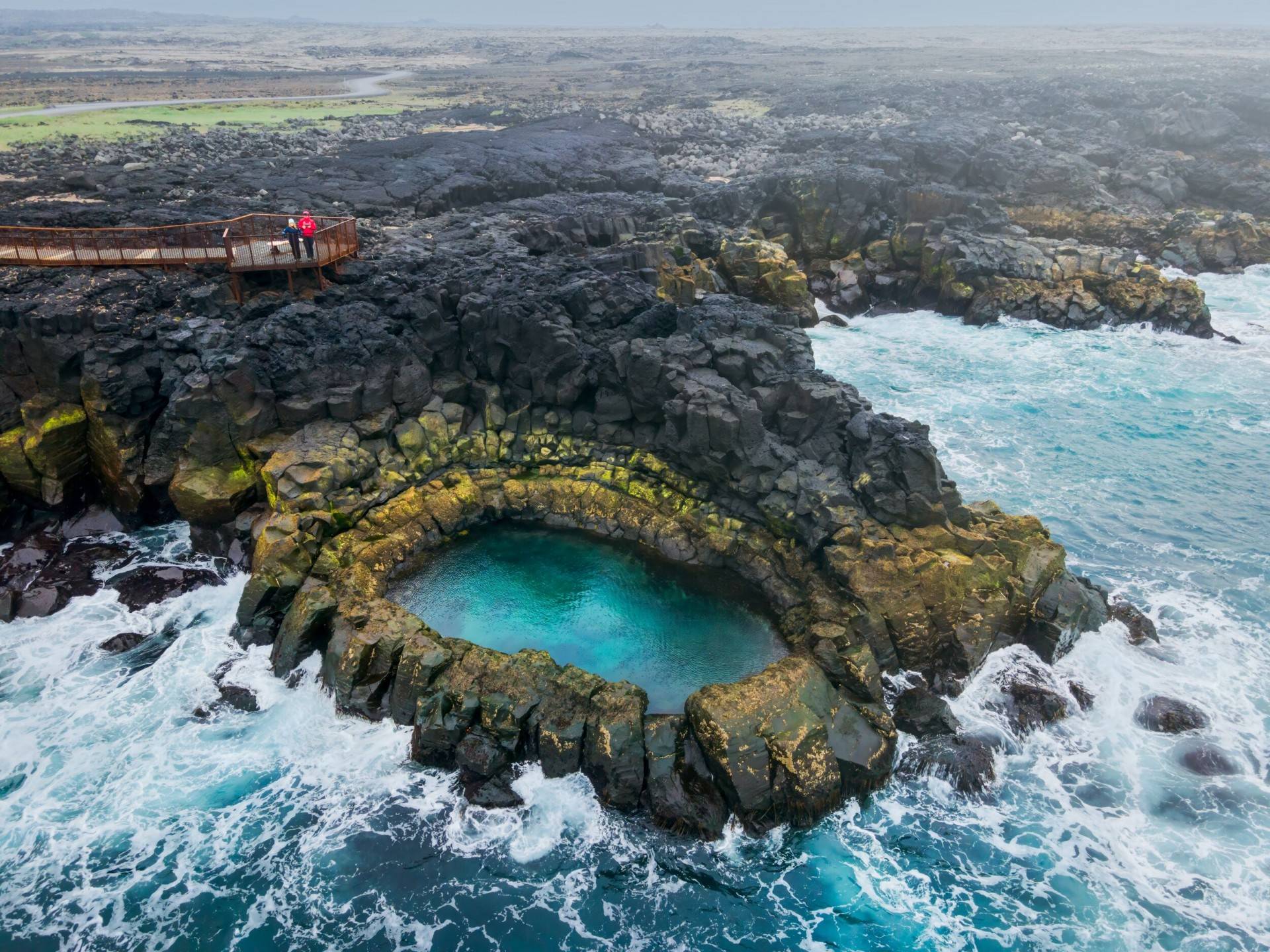
Brimketill is a natural lava rock pool shaped by strong Atlantic waves. From the parking area, a steel walkway leads to a viewing platform overlooking the pool.
While it may look inviting, this is not a place to swim. The waves are powerful and unpredictable, and during rough conditions, they can reach the platform. It’s best experienced as a viewing stop.
8. Seltún Geothermal Area
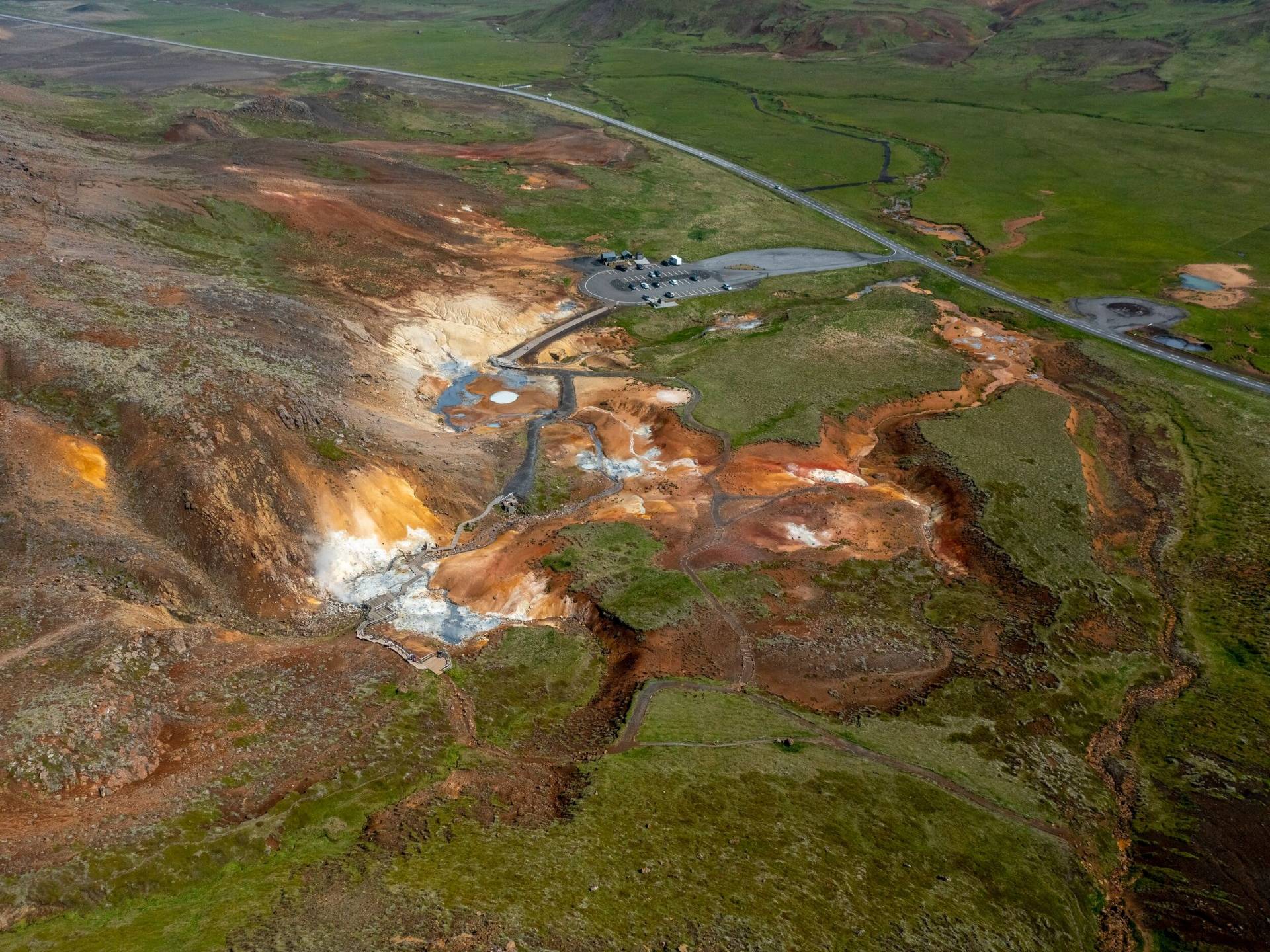
Located in the Krýsuvík area, Seltún is one of the most active geothermal sites on the Reykjanes Peninsula. Wooden walkways take you through steaming vents and bubbling mud pools. You’ll notice a strong sulfur smell, along with minerals that color the ground in shades of red, yellow, and blue.
It’s one of the most accessible geothermal areas on the peninsula and an easy stop to explore.
9. Lake Kleifarvatn
Lake Kleifarvatn is the largest lake on the Reykjanes Peninsula, covering about 3 sq mi (8 sq km). It reaches depths of up to 295 ft (90 m), making it one of the deepest lakes in Iceland.
The lake sits above geothermal systems, and its water levels have fluctuated due to past seismic activity. If you’re driving along Road 42, you’ll find several viewpoints where you can stop for elevated views of the lake.
Have plenty of time to explore? There are several things to do around Lake Kleifarvatnthat you can try.
Try Various Outdoor Experiences in Reykjanes
Beyond sightseeing, the Reykjanes Peninsula offers a variety of outdoor experiences. Here are some you can try during your visit.
1. Snorkeling at Lake Kleifarvatn
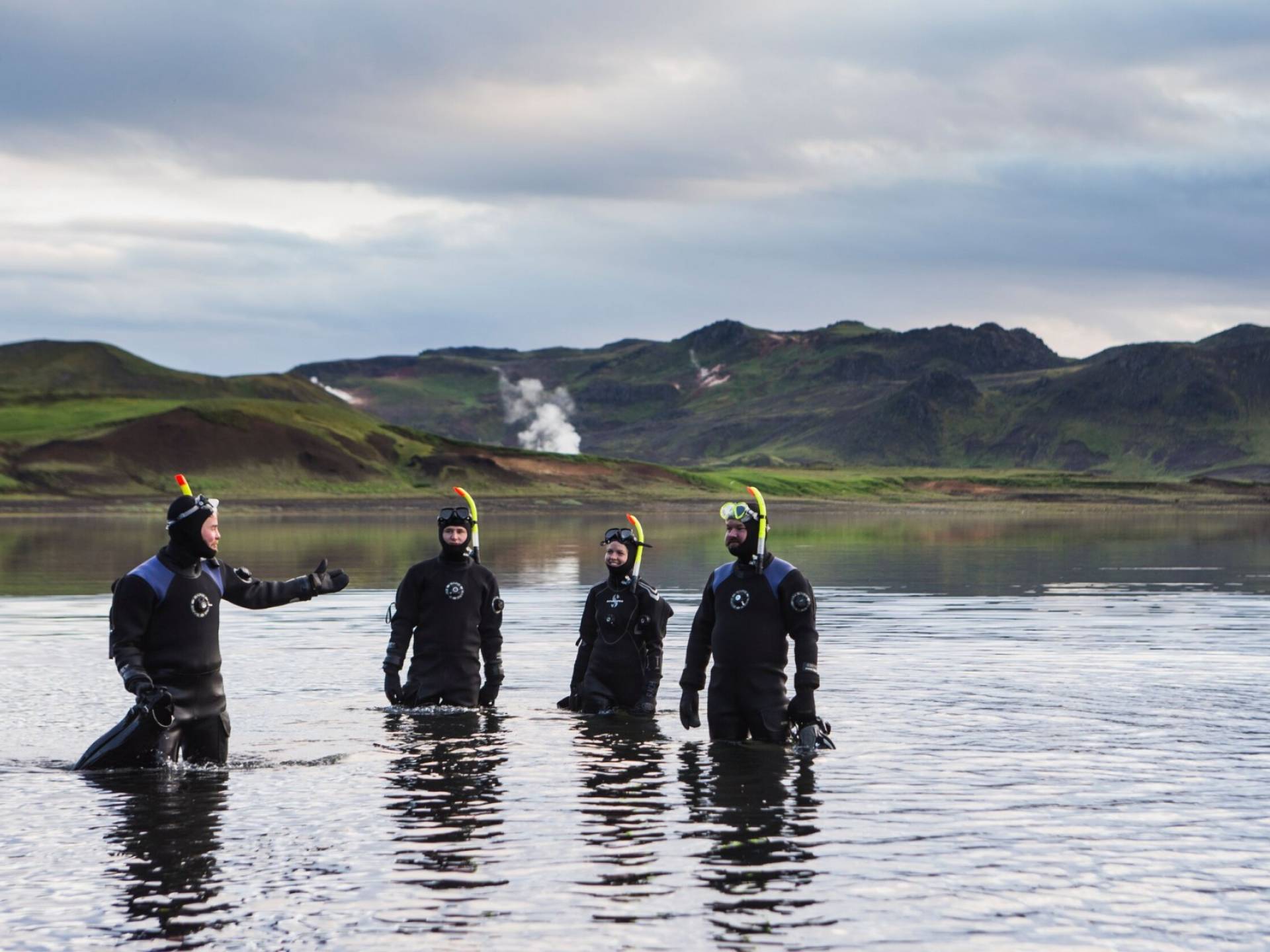
Speaking of Lake Kleifarvatn, you can also snorkel over hot springs here. The lake sits on the Mid-Atlantic Ridge, where geothermal activity creates underwater vents close to shore.
A central crater releases warm water and gases, producing steady bubbles that cause subtle vibrations. It’s a rare sensation you can feel as you float above the lake floor.
This experience is best done with a guide. With DIVE, you’ll be guided every step of the way by certified instructors. Complete with a dry suit and full equipment to keep you warm and comfortable.
For certified divers, we also offer diving in Kleifarvatn, where you can explore the same geothermal features below the surface. You’ll get closer to the crater and underwater formations, with a guide ensuring a safe and controlled experience throughout.
2. Diving off the waters of Reykjanes
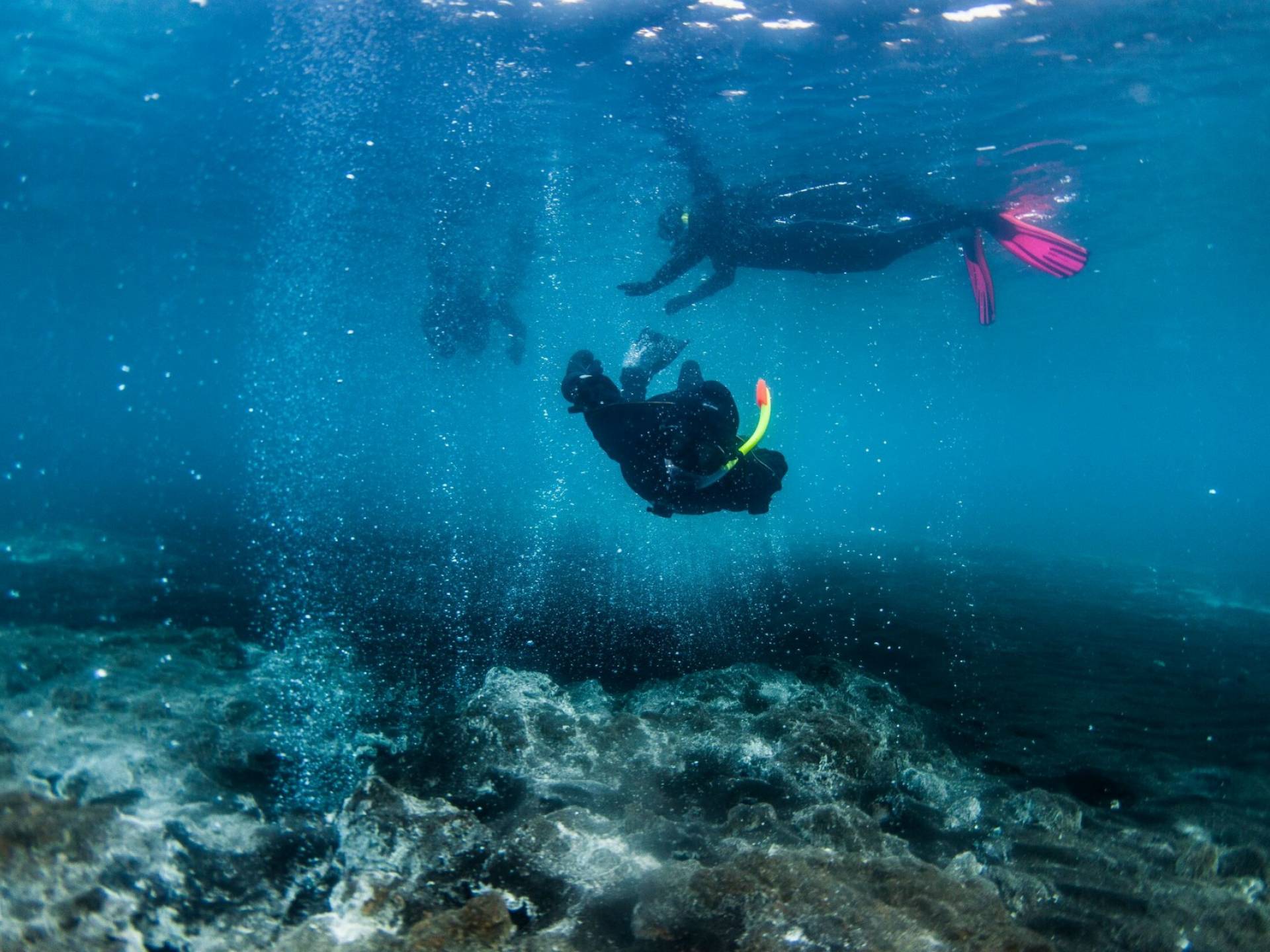
Want to scuba dive off the Reykjanes Peninsula? There are several sites to choose from, each offering a different underwater experience.
For ocean diving, Garður provides access to rocky seabeds, underwater lava formations, and local marine life. This site is more exposed to Atlantic conditions and is best suited for certified divers. After you snorkel in Garður, you get to enjoy a warm cup of hot chocolate and cookies.
For a more sheltered dive, Bjarnagjá offers calmer conditions within a fissure setting. Here, you can explore clear water, submerged rock formations, and narrow underwater passages in a more controlled environment.
3. Surfing at Sandvík
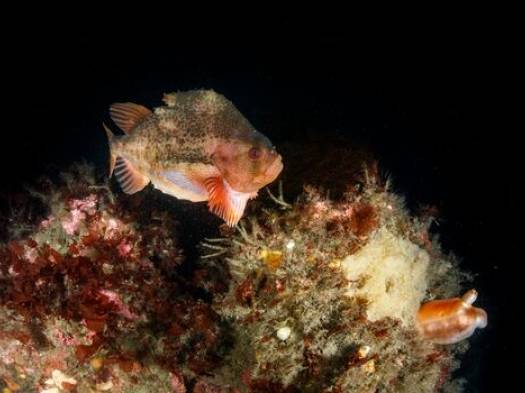
Sandvík Beach is one of the most consistent surfing spots in Iceland, with continuous swell from the North Atlantic. It’s especially popular during the winter months (October to March), when conditions are at their best.
Other surfing options on the Reykjanes Peninsula include Garður and Grindavík, which can offer suitable conditions depending on the day.
4. Hiking mountains & volcanic landscapes
Hiking is one of the best ways to experience the peninsula’s lava fields and volcanic terrain. Popular hiking areas include:
Keilir: A distinctive cone-shaped hyaloclastite mountain offering panoramic views from the summit
Þorbjörn: A short but steep hike near Grindavík with views over the surrounding lava fields
Eldborg crater (next to Geitahlíð): A well-preserved volcanic crater with a defined hiking path
Lambafellsgjá: A narrow volcanic fissure you can walk through, offering a closer look at the peninsula’s tectonic features
Always check trail conditions before heading out and stay on marked paths to protect both yourself and the environment.
5. ATV & horseback riding across lava fields
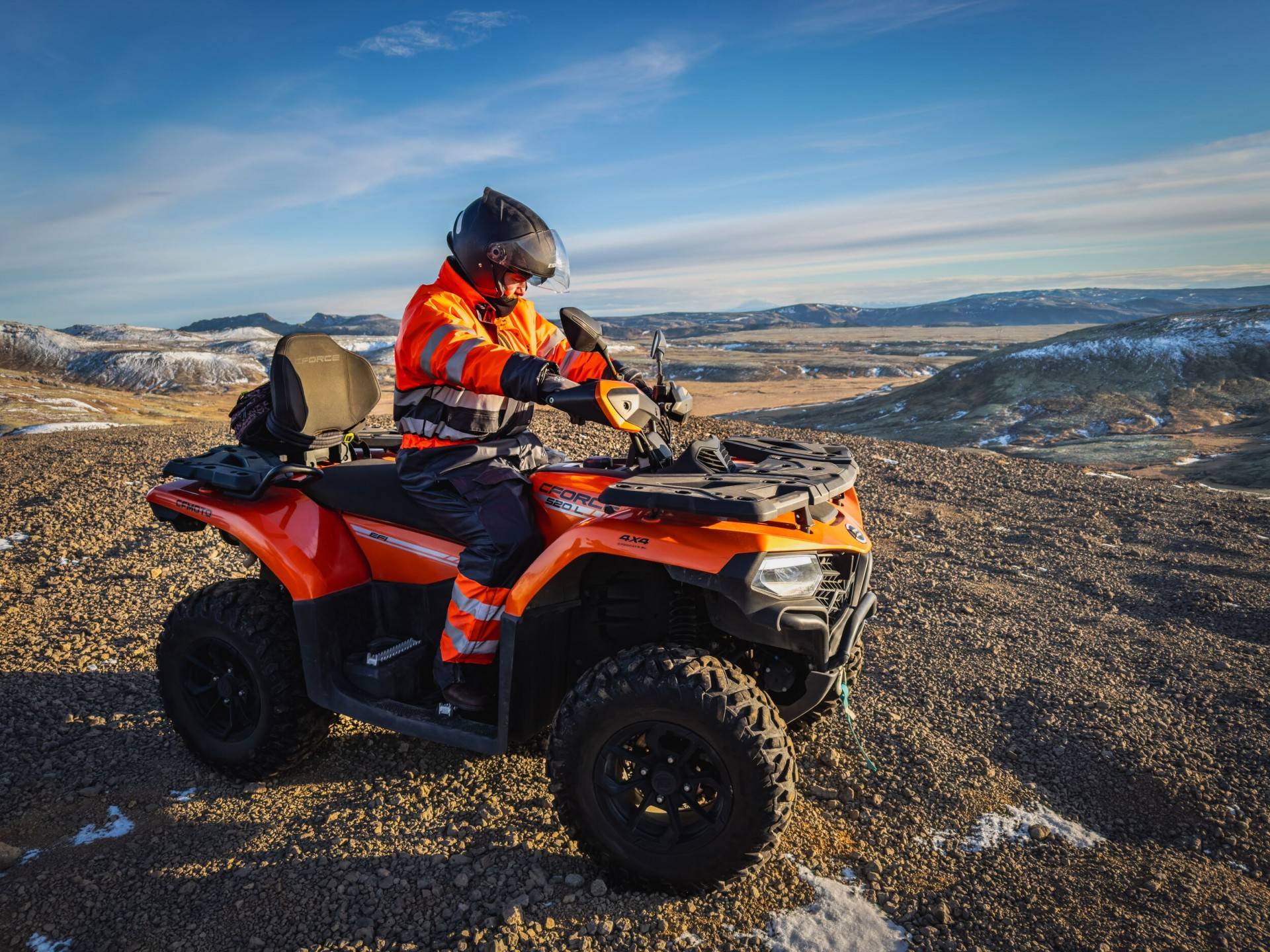
ATV tours and horseback riding offer a practical way to explore larger areas of the Reykjanes Peninsula. These guided experiences take you across lava fields, coastal paths, and open terrain that are difficult to access on foot.
6. Puffin spotting at Hafnarberg Sea Cliffs
Hafnarberg is one of the best spots on the peninsula for birdwatching, especially during the summer months when puffins are present. Walking paths run along the cliffs, allowing you to get closer to the coastline. From here, you can observe seabirds in their natural habitat while taking in open ocean views.
7. Northern Lights hunting
From September to April, the Reykjanes Peninsula offers good conditions for viewing the Northern Lights. Its low light pollution and open landscapes make it a convenient option, especially for travelers staying near the airport.
Good viewing spots include Lake Kleifarvatn and the Garður Old Lighthouse area, which provide clear views of the night sky.
Note: As always, sightings depend on weather and solar activity, so flexibility is key.
Discover Reykjanes’ History & Culture
The Reykjanes Peninsula is also home to several historical and cultural sites. Here are some places worth visiting.
1. Krýsuvíkurkirkja Church
Krýsuvíkurkirkja is a small black wooden church set in a remote volcanic landscape, creating a strong contrast with its surroundings. Built in 1857 for the local farming community, it reflects traditional Icelandic design.
The church was destroyed by arson in 2010 and rebuilt between 2020 and 2022. Today, it stands as a restored cultural landmark, especially striking in winter against the snow-covered terrain.
2. Selatangar fishing station
Selatangar is an abandoned fishing station along the southern coast. The remains of stone shelters show how fishermen once lived and worked in harsh coastal conditions. It offers a glimpse into Iceland’s fishing history and the challenges faced by early coastal communities.
3. Stekkjarkot
Stekkjarkot is a preserved turf cottage that reflects traditional Icelandic rural life. Originally used by fishermen, it shows how people adapted to the environment using materials like turf, stone, and timber. The site is open to the public and provides a simple look at how coastal communities once lived and worked.
4. Viking World
Located near Stekkjarkot, Viking World is a museum that focuses on Iceland’s Viking history and early settlement. It features a full-scale replica of a Viking ship, along with exhibits that explore exploration routes, daily life, and seafaring traditions. It’s a useful stop for understanding the historical background behind Iceland’s early communities.
5. Giantess Cave
The Giantess Cave is a small, family-friendly attraction based on Icelandic folklore. Created by author Herdís Egilsdóttir, it brings to life stories about the character Giganta. Inside, you’ll find a full-size figure of Giganta seated in a rocking chair. The cave also offers views over the bay of Keflavík and Faxaflói.
It’s open daily with free admission, making it an easy stop to include in your itinerary.
Explore the Wonders of Reykjanes Peninsula
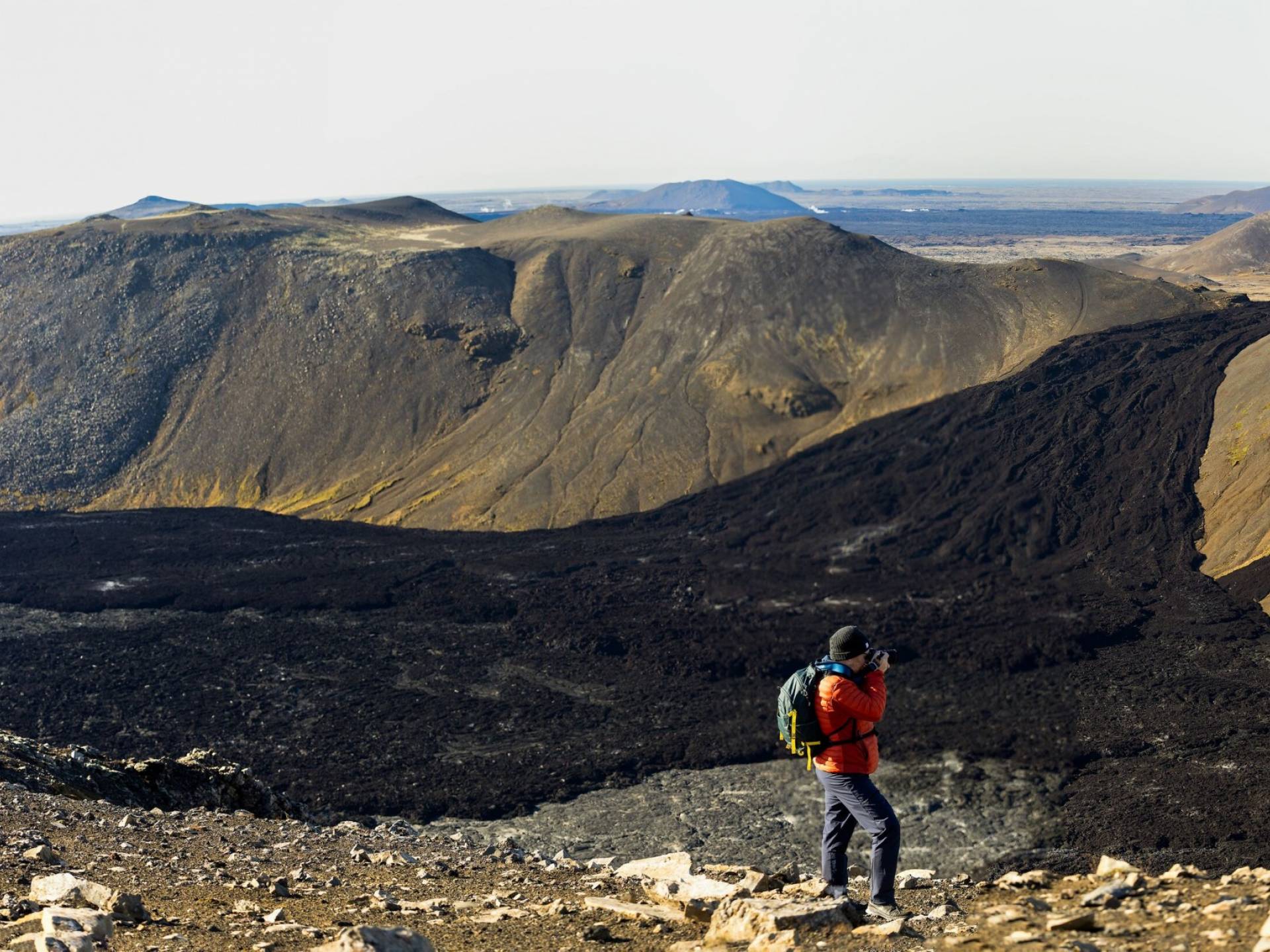
The Reykjanes Peninsula brings together some of Iceland’s most defining features in one region. From recent volcanic activity to cultural sites, it offers a range of experiences that go beyond a quick stop.
Whether you’re walking across lava fields, exploring geothermal areas, or trying outdoor activities, there’s plenty to see at your own pace. With its mix of accessible locations and active landscapes, Reykjanes is a destination worth exploring in its own right.