Silfra vs. Kleifarvatn
Which Iceland snorkeling spot is right for you?
If you’re deciding between Silfra or Kleifarvatn for snorkeling in Iceland, the short answer is this:
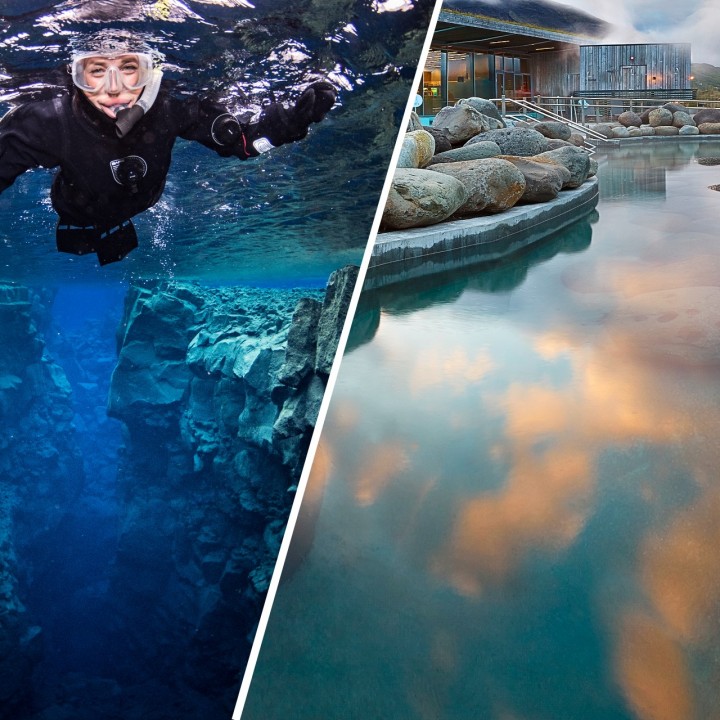
Choose Silfra for unmatched visibility and tectonic plate diving.
Choose Kleifarvatn for raw volcanic atmosphere and a more off-the-beaten-path feel.
Both are extraordinary. Both are cold. Both are uniquely Icelandic. But they offer very different experiences.
What Makes Silfra and Kleifarvatn Different for Snorkeling?
One big difference in these two locations is water source and subsequently visibility.
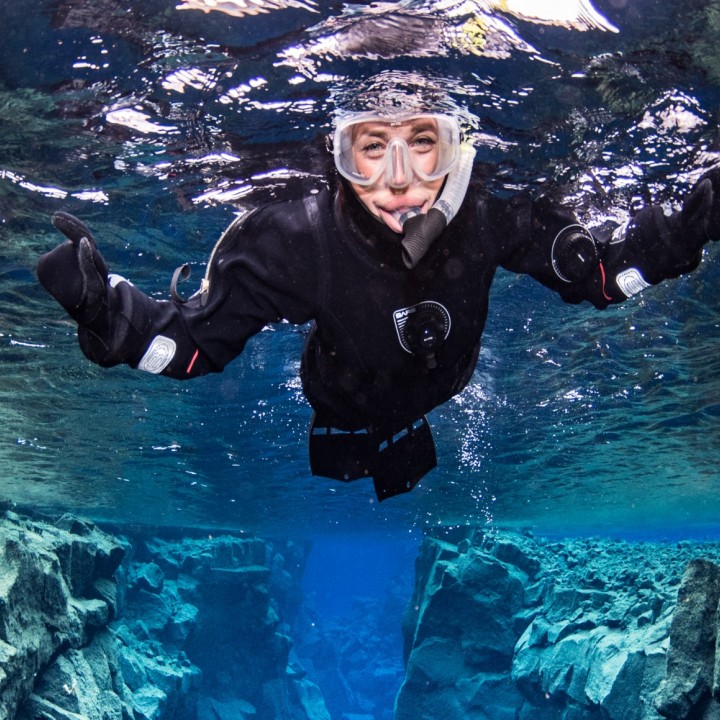
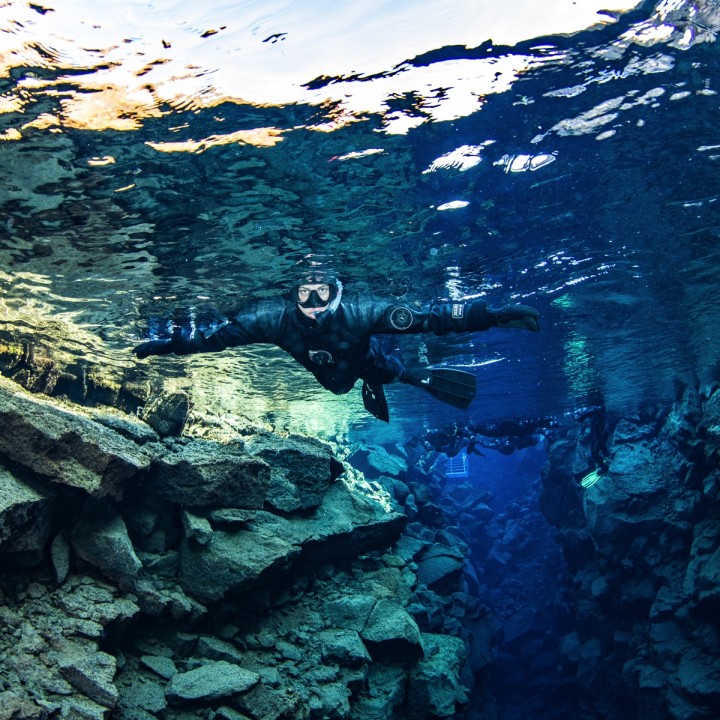
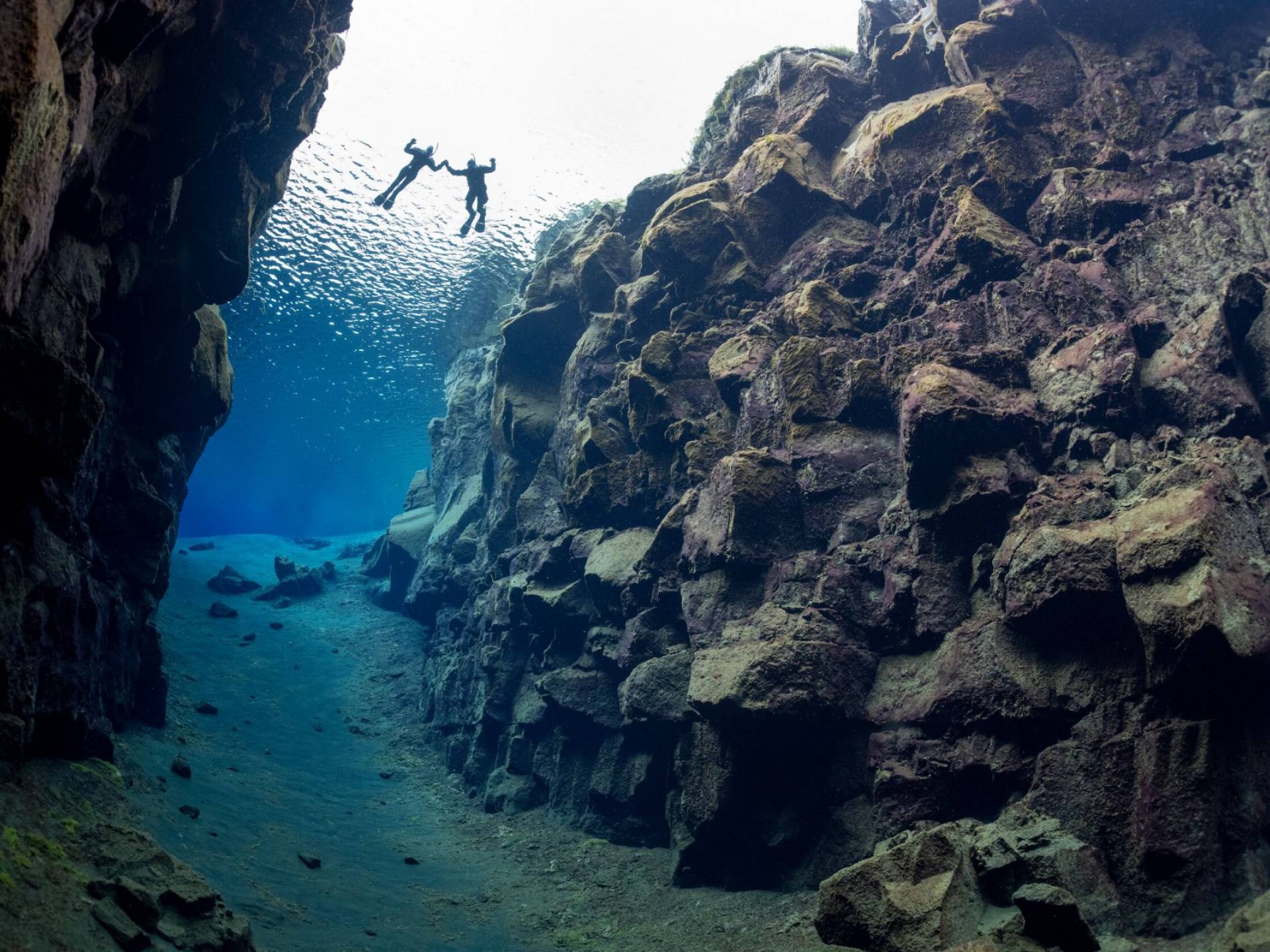
Silfra is filled with glacial meltwater filtered for decades through lava rock. Visibility regularly exceeds 100 meters.
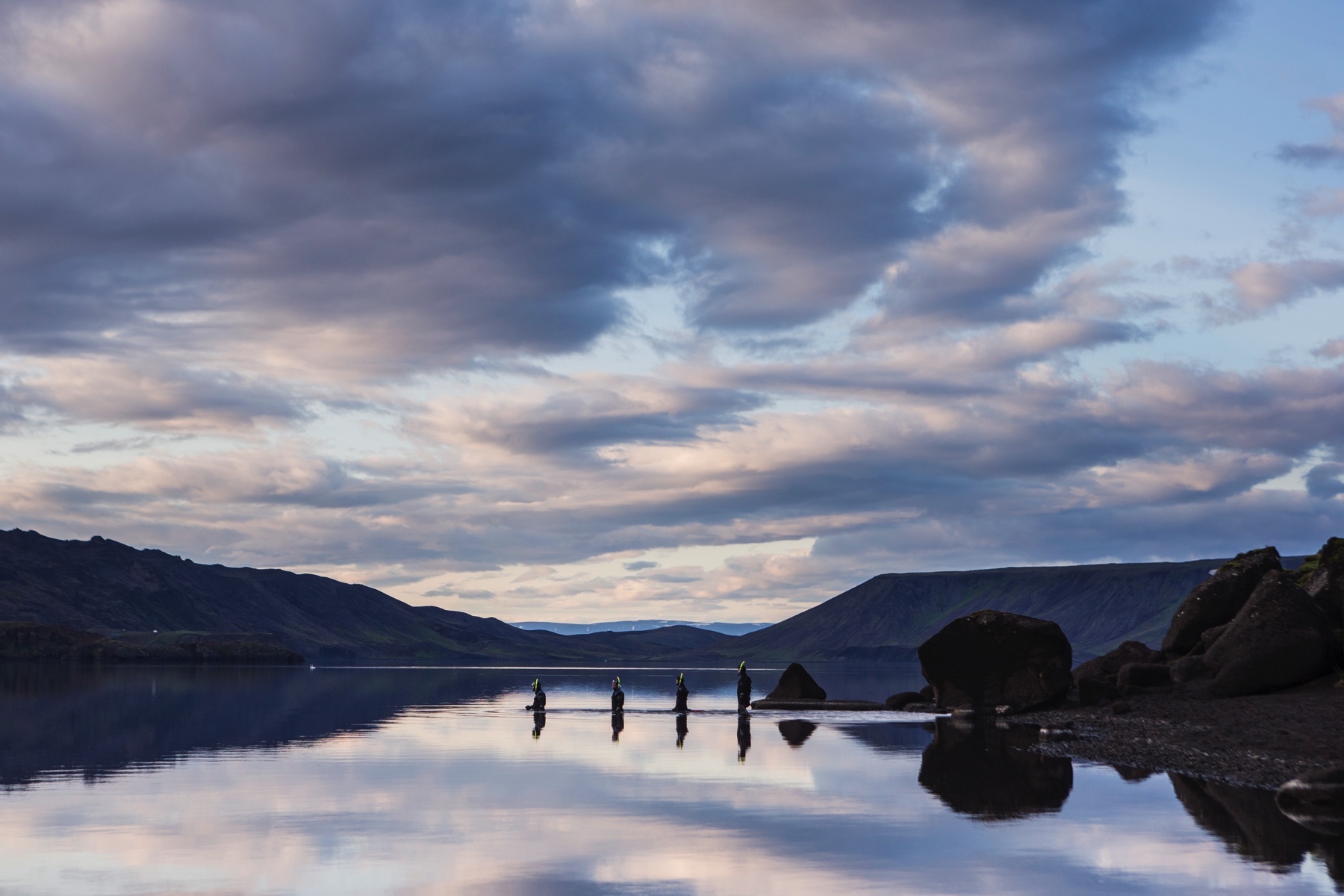
Kleifarvatn is a large volcanic lake on the Reykjanes Peninsula. Visibility varies significantly and is typically lower.
Silfra is world-famous for crystal clarity and tectonic plate snorkeling.
Kleifarvatn is known for geothermal landscapes and volcanic geology.
Another notable difference is water temperature and difficulty level.
Make no mistake about it, Silfra is cold. Average water temperature is 2-4°C all year round or approx. 35-39°Fahrenheit. Snorkeling and diving is done in dry suits to keep you comfortable but you will likely not mistake Silfra for a cozy hot tub.
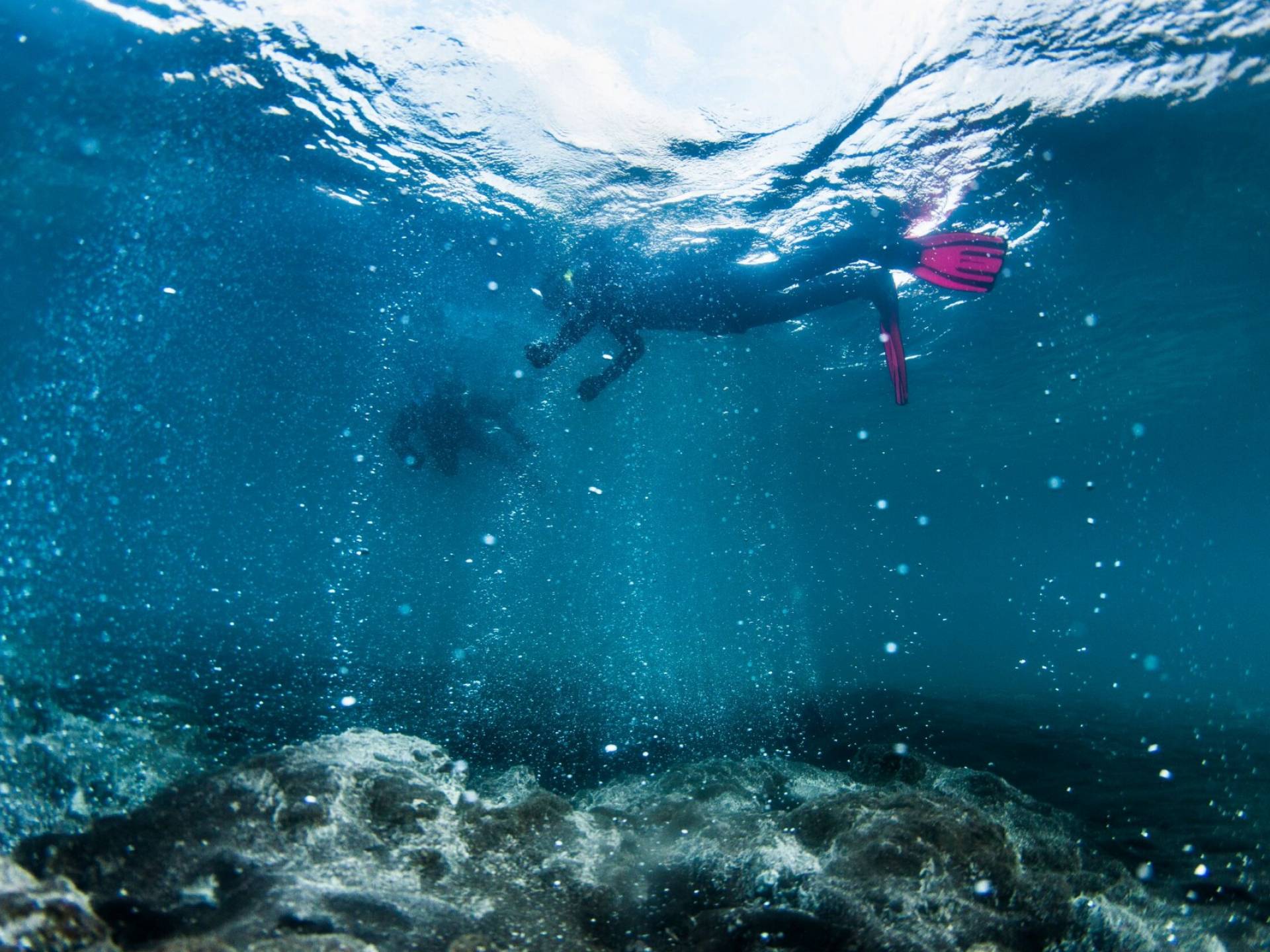
Kleifarvatn is one of Iceland's deepest lakes, reaching depths of 97 meters. It is more weather-dependant on temperature and it can vary greatly between seasons. But that's not all, Kleifarvatn is a geoethermal lake and its shallow southernmost part has underwater hot springs, meaning in localized areas, the water temperature is much warmer than elsewhere. Given the shallow waters along the hot springs where we go snorkeling, this is a very easy snorkeling tour and while it does include dry suits, the cold won't be anywhere near as noticable as in Silfra.
If ultra-clear water matters most, Silfra wins. If atmosphere and active geology excite you, Kleifarvatn has its own unique appeal.
What Is It Like to Snorkel at Silfra?
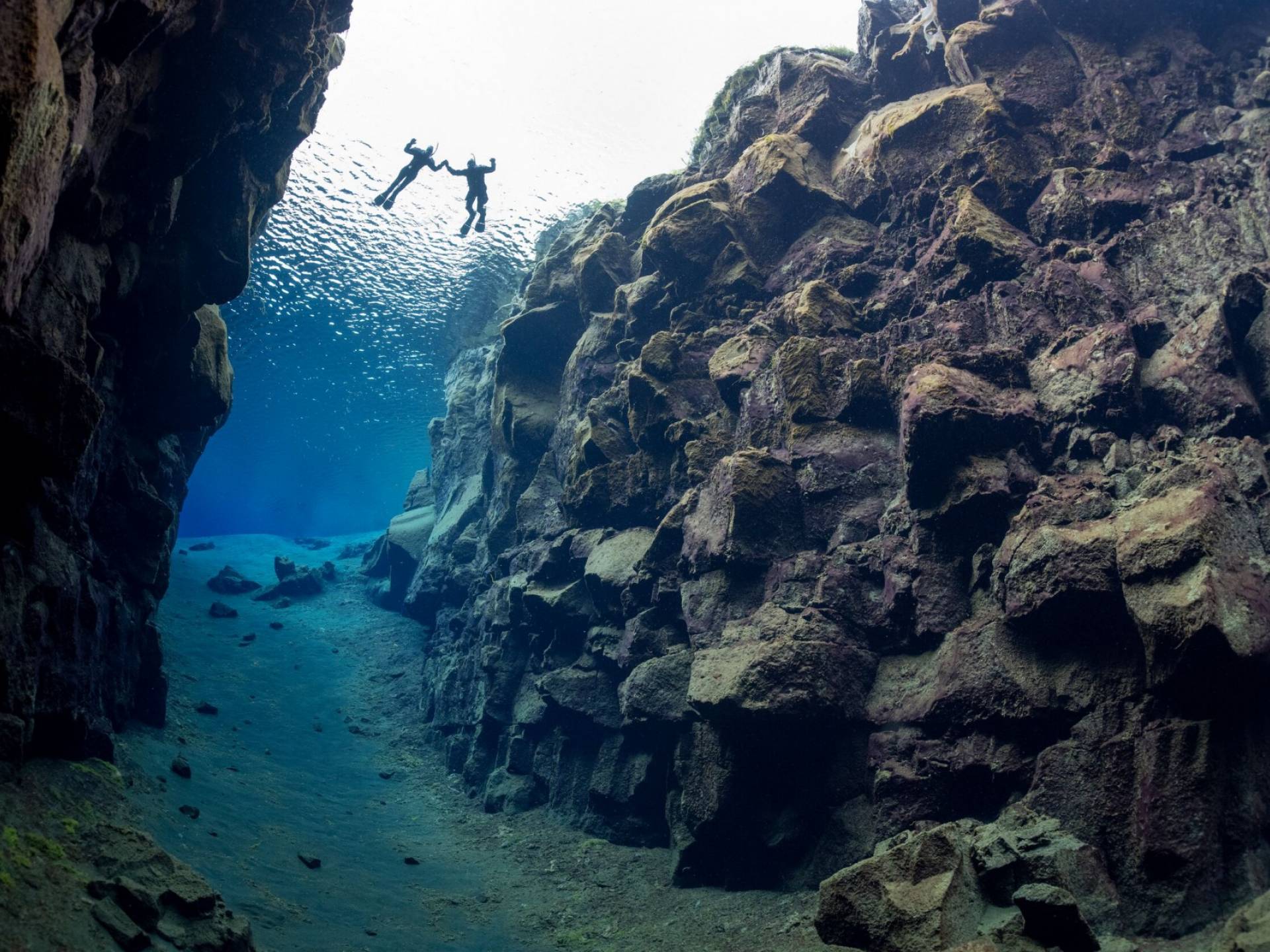
Silfra is a fissure located in Thingvellir National Park, a UNESCO World Heritage Site. You literally snorkel between the North American and Eurasian tectonic plates. The fissure forms a long, narrow canyon with dramatic rock walls, deep blue water, and surreal underwater light. The visibility is unmatched and the geological formations displayed underwater are unforgettable. A guide leads the group a semi-circle from shore to shore. Snorkeling in Iceland always requires a dry suit and it is nowhere as necessary as in the cold waters of Silfra. Cold as it may be, it is one of the most worthwhile snorkeling experiences in the world. A bold statement we stand by. Silfra snorkeling Iceland highlights include:
- Visibility often over 100 meters
- Glacial water at 2–4°C year-round
- Dry suit snorkeling for thermal protection
- Sections like the Cathedral, Silfra Hall, and Silfra Lagoon
What Is It Like to Snorkel at Kleifarvatn?
Snorkeling in Kleifarvatn in Iceland is very different from the Silfra experience. Kleifarvatn is one of the largest lakes on the Reykjanes Peninsula and one of the deepest lakes in Iceland, reaching depths of 97 meters. The landscape surrounding it is dramatic with black lava fields, steaming geothermal vents, and colorful mineral slopes. Underwater, you won’t see tectonic plates or canyon formations like Silfra. But what lies beneath is no less surprising and mind-boggling. A short distance from the shore, the guide will locate underwater geothermal vents. These are hot springs that release warm water and bubbles and the surrounding lake bed is full of geological formations from the activity. There are tiny vents all around, odd colors of clay and minerals and tickling and vibrating bubbles all around. Kleifarvatn offers a unique insight into the geological forces of Iceland in one of the most geologically active areas in Iceland. The area feels remote and the location is powerful, shaped by volcanic forces.
Which Spot is Better For First-Time Snorkelers in Iceland?
It's a tough question because Kleifarvatn is slightly easier but Silfra is a must-do.
But if we are pressed for an answer we'll say Silfra likely wins because:
- Predictable conditions
- Exceptional visibility
- Controlled entry points
- Well-developed infrastructure
Silfra tours are far more popular and because Silfra has been a big destination for a much longer time, the site is very well structured, regulated by the National Park of Þingvellir and has some infrastructure after decades of operation.
Kleifarvatn can feel more adventurous and less controlled. It is more vulnerable to cancellations due to weather. There will likely be no other human in sight as the area is remote, a big plus for some travelers, and the experience is better suited for travelers who prioritize the unique geological setting over underwater visibility.
Start with Silfra but definitely do both. Both locations are incredibly, unforgettable and unique.
What Gear Is Required for Snorkeling in Iceland?
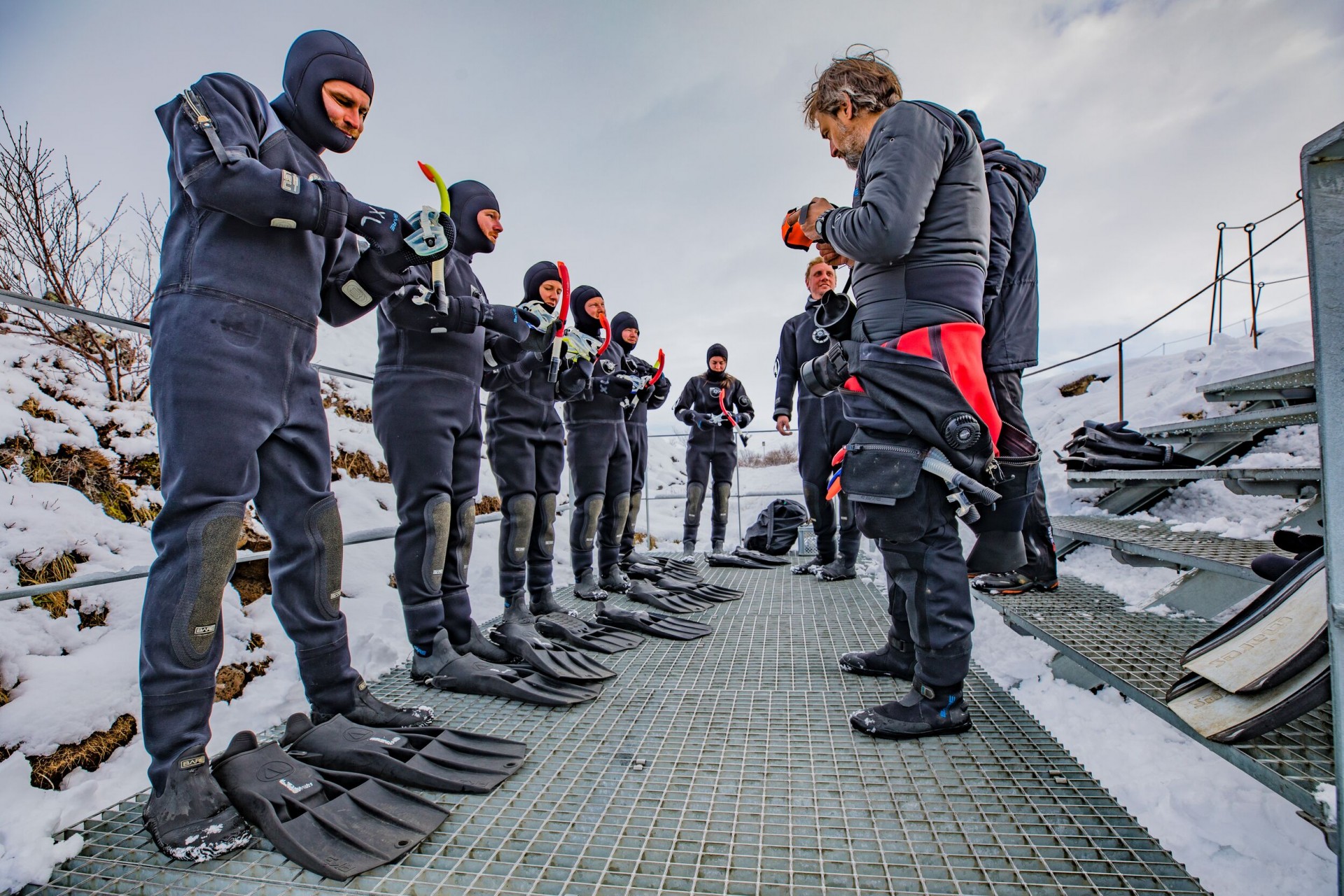
Both locations require dry suits, not wetsuits. Water temperatures in both Silfra and Kleifarvatn are near freezing. Dry suits keep you insulated and dry, with thermal layers underneath. Our snorkeling tours include the following necessary gear:
- Dry suit
- Thermal undersuit
- Hood
- Gloves
- Mask and snorkel
- Fins
- Be comfortable in water
- Meet minimum age and physical requirements
- Follow dry suit briefing instructions
How Cold Is the Water in Silfra and Kleifarvatn?
Silfra remains between 2–4°C year-round.
This temperature is stable because the water is glacial melt filtered underground for decades before entering the fissure.
Kleifarvatn temperatures vary more depending on season and weather and the snorkeling area during our tour centres around a geothermally active location which by default has warmer water.
With a dry suit, most participants remain comfortable for the full snorkeling duration. Your face is the only exposed area, and the cold sensation fades quickly.
Cold water snorkeling Iceland is safe and comfortable when properly equipped.
When Is the Best Time of Year to Snorkel?
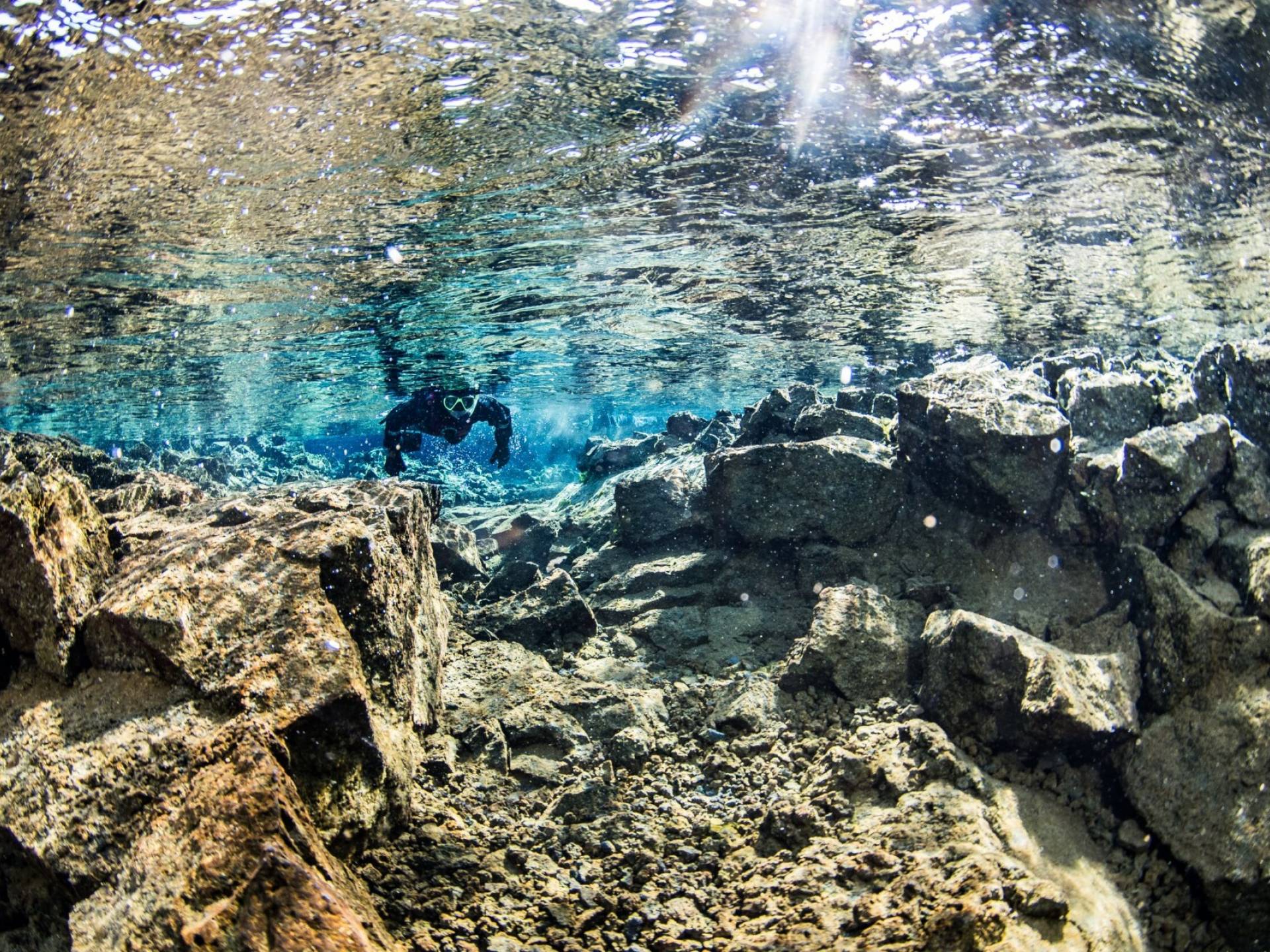
Silfra is snorkelable year-round. Winter snorkeling offers snow-covered lava landscapes and fewer visitors. Summer provides long daylight hours and milder air temperatures. Kleifarvatn is more weather-dependent. Wind and surface conditions affect visibility and comfort and tours are usually only available from spring until fall. If seasonality matters, Silfra is more predictable.
How Easy is Access from Reykjavík
Silfra is approximately 45 minutes from Reykjavík. It is located inside Þingvellir (Thingvellir) National Park with designated parking and entry infrastructure.
Kleifarvatn is located on the Reykjanes Peninsula, roughly 30–40 minutes from Reykjavík depending on route.
Both are very accessible with a standard rental car but we also offer transfers from Reykjavík which make it even easier.
What Underwater Scenery Can You Expect?
Silfra underwater scenery includes:
- Deep blue fissures
- Rock walls shaped by tectonic movement
- Lava formations
- Crystal-clear glacial water
- Dramatic light beams in deeper sections
It feels like flying in liquid air.
Kleifarvatn underwater scenery includes:
- Bubbling hot springs
- Volcanic sediment
- Dark lakebed textures
- Subtle geological features
- Moody lighting
Silfra is visually striking and if underweater clarity is a priority, Silfra wins.
Kleifarvatn is an atmospheric feast for the senses and if a unique and remote snorkeling experience is on your bucket list, Kleifarvatn takes the win.
Can You Snorkel Independently?
No.
Snorkeling in Iceland requires dry suits and safety protocols. Silfra specifically requires certified operators with permits.
You must join a licensed tour provider.
DIVE.IS snorkeling day tours operate under strict safety standards and professional supervision.
Pros & Cons: Silfra vs Kleifarvatn
Silfra Pros
- World-class visibility
- Unique tectonic plate location
- Year-round reliability
- Highly developed safety systems
- UNESCO site setting
Silfra Cons
- More popular with bigger crowds
- Colder air exposure in winter
Kleifarvatn Pros
- Dramatic volcanic landscape
- Shallow water
- Remote setting
- Fewer visitors
- Reykjanes Peninsula setting
Kleifarvatn Cons
- Variable visibility
- Less infrastructure
- More weather dependent
How to Choose Based on What You Value
Choose Silfra if you value:
- Clear water
- Iconic bucket-list experience
- Geological uniqueness
- Reliable conditions
- First-time snorkeling confidence
Choose Kleifarvatn if you value:
- Volcanic landscape
- Off-the-beaten-path atmosphere
- Reykjanes Peninsula scenery
- Moody, raw environments
For most travelers asking “snorkeling Iceland Silfra or Kleifarvatn?” — Silfra is the superior underwater experience.
What to Know Before Snorkeling in Iceland
- You must wear a dry suit.
- You must be comfortable in water.
- You must follow guide instructions.
- You will not get wet inside the suit.
- Cold water shock is minimal with proper gear.
- Snorkeling is guided at all times.
This is cold-water snorkeling Iceland done professionally and safely.
Final Verdict: Silfra vs Kleifarvatn
If you want the most extraordinary underwater visibility in the world, snorkel Silfra. If you want dramatic volcanic atmosphere and fewer crowds, consider Kleifarvatn. Silfra remains Iceland’s most iconic snorkeling experience for a reason. If you're ready to snorkel between tectonic plates in crystal-clear glacial water, explore available Iceland snorkeling tours with Dive.is.